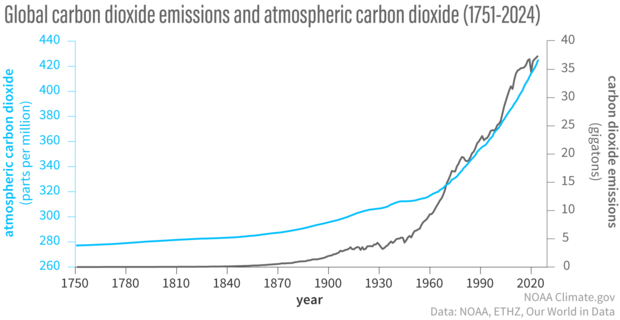
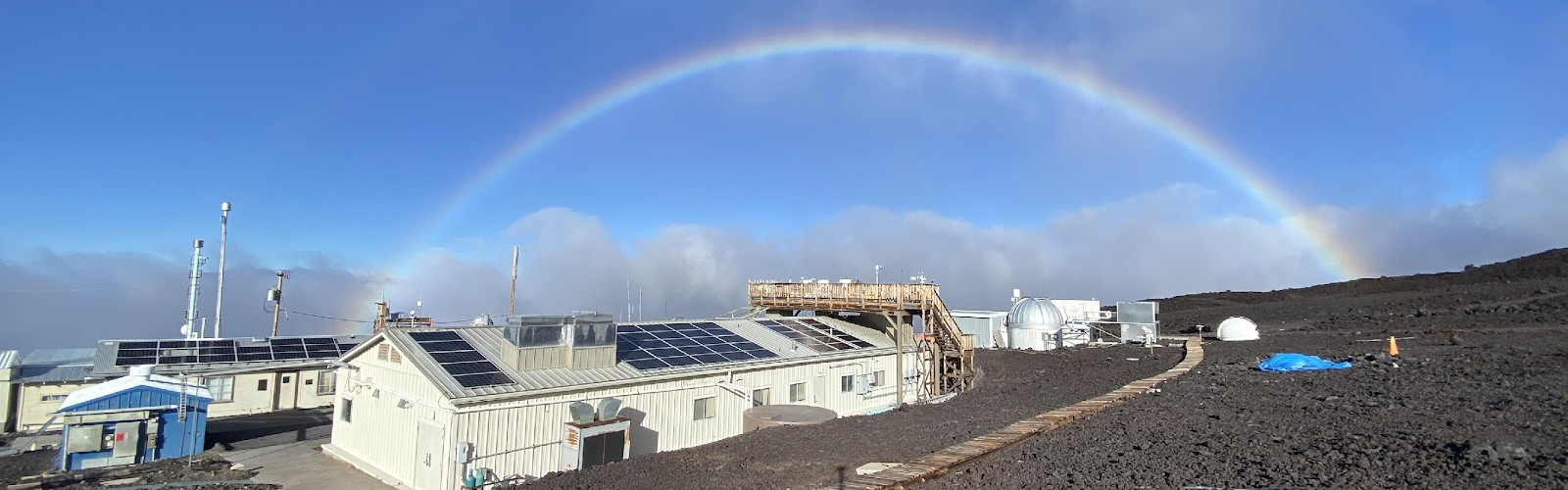
The atmospheric monitoring station atop Mauna Loa records 431.12 parts per million of carbon dioxide—the highest concentration in human history and rising at 2.4 ppm annually. In research centers from Harvard to the Max Planck Institute, atmospheric scientists calculate that even with aggressive emissions reductions, current trajectories lead to catastrophic warming within decades. But 20 kilometers above Earth’s surface, specialized aircraft are already testing humanity’s most controversial backup plan: deliberately engineering the planet’s atmosphere to reflect solar radiation back to space before it can warm the surface.
This isn’t science fiction—it’s stratospheric aerosol injection (SAI), a form of solar radiation management that mimics the cooling effects of major volcanic eruptions. When Mount Pinatubo exploded in 1991, it injected 17 million tons of sulfur dioxide into the stratosphere, cooling global temperatures by 0.5°C for nearly two years. Atmospheric engineers propose doing this deliberately and continuously, using high-altitude aircraft or specialized balloons to deploy reflective particles that could offset decades of greenhouse gas warming while society transitions to carbon-neutral technologies.
Yet this planetary-scale intervention faces a crucial reality: success could provide essential climate stability, but failure or sudden termination could trigger rapid warming far exceeding natural climate change. Understanding the engineering challenges, atmospheric physics, and governance complexities of stratospheric modification reveals why some researchers consider it humanity’s most important emergency technology—and others call it our most dangerous gamble.
The Physics of Planetary Cooling: How Stratospheric Particles Control Earth’s Energy Balance
To understand how stratospheric aerosol injection could modify global climate, consider Earth’s energy budget as a massive accounting system. The planet receives approximately 1,361 watts of solar energy per square meter at the top of the atmosphere—enough energy hitting Earth each hour to power human civilization for an entire year. About 30% of this energy gets reflected back to space by clouds, ice, and atmospheric particles, while 70% gets absorbed and warms the surface.
Stratospheric aerosol injection works by increasing the reflective portion through engineered scattering. When volcanic eruptions like Mount Pinatubo inject sulfur compounds into the stratosphere, they form sulfuric acid aerosols—microscopic droplets approximately 0.1 to 1.0 micrometers in diameter. These particles are sized precisely to scatter visible solar radiation while remaining largely transparent to infrared radiation that Earth emits back to space. Think of it like installing a partially silvered mirror 20 kilometers above the planet: incoming sunlight gets reflected away, but Earth’s outgoing heat radiation passes through relatively unimpeded.
The engineering principles behind this approach rely on Mie scattering—the same optical phenomenon that makes clouds appear white. When light hits particles that are roughly the same size as the light’s wavelength, it bounces off in all directions like a billiard ball hitting a rack of balls. Research by Harvard’s David Keith demonstrates that sulfuric acid particles with diameters between 0.2-0.5 micrometers achieve optimal scattering efficiency—about 1/200th the width of a human hair. To put this in perspective: offsetting the warming from doubled atmospheric CO2 concentrations would require approximately 1-5 million tons of sulfur dioxide annually. This sounds massive until you realize it represents less than 1% of global sulfur emissions—equivalent to the output of about 50 coal power plants, but deployed precisely where it’s most effective for climate control.
The stratosphere provides an ideal engineering environment because it lies above weather systems and has residence times of 1-2 years, meaning particles remain effective much longer than tropospheric interventions. Unlike lower atmosphere modifications that get washed out by rain within days, stratospheric aerosols circulate globally and provide sustained climate effects. However, this persistence also creates the intervention’s greatest risk: once deployed at scale, stopping the program would cause rapid warming as the particles gradually settle out, potentially creating temperature increases far exceeding natural climate change rates.
Engineering Challenges: Deployment Systems, Particle Design, and Atmospheric Distribution
Stratospheric aerosol injection requires solving three interconnected engineering problems: how to deliver materials to 20-50 kilometer altitudes continuously, how to design particles that maximize cooling while minimizing side effects, and how to achieve global distribution that doesn’t create regional climate disruptions. Each challenge pushes current aerospace and materials engineering to their limits while demanding unprecedented international coordination.
The delivery mechanism represents perhaps the most technically straightforward yet logistically complex aspect. Current research focuses on three primary approaches: high-altitude aircraft similar to the U-2 or SR-71 reconnaissance planes, specialized stratospheric balloons, and purpose-built rockets designed for routine atmospheric deployment. Harvard’s Stratospheric Controlled Perturbation Experiment (SCoPEx) planned to use a stratospheric balloon to release small quantities of calcium carbonate particles, demonstrating controlled deployment and measurement techniques before the project was suspended due to local opposition.
Aircraft-based delivery offers the advantage of precise timing and location control, but requires developing planes capable of carrying multi-ton payloads to stratospheric altitudes repeatedly. Research by Carnegie Science suggests that modified Gulfstream G650 aircraft could deliver approximately 25,000 tons of material annually, but scaling to the required 1-5 million tons would necessitate a fleet of hundreds of specialized aircraft operating continuously. The engineering challenge isn’t just building these planes—it’s maintaining flight operations in the thin atmosphere where conventional jet engines operate at reduced efficiency and pilots require space-suit-like protection systems.
Particle engineering presents even more complex challenges because the deployed materials must survive the stratosphere’s harsh environment while performing like precision optical instruments. The stratosphere isn’t a gentle place—intense ultraviolet radiation, temperatures below -70°C, and near-vacuum conditions would destroy most materials within weeks. Think of it like designing sunglasses that must work perfectly for two years while floating in the world’s most hostile environment, reflecting exactly the right wavelengths of light while remaining chemically stable.
Sulfuric acid aerosols—the natural choice based on volcanic analogs—provide excellent scattering efficiency but potentially worsen ozone depletion and create acid rain when they eventually settle. It’s like using a highly effective medicine that has serious side effects: the cure might work, but the complications could be worse than the original disease. Alternative materials like calcium carbonate, titanium dioxide, or even engineered diamond particles offer different trade-offs between optical effectiveness, environmental impact, and cost.
Recent research by Wake Forest University explores using hollow glass microspheres that could provide superior performance while remaining chemically inert—imagine microscopic soap bubbles made of glass that float in the stratosphere for years while scattering sunlight. These engineered particles would cost significantly more than sulfur compounds but could potentially reduce deployment mass requirements by 50% due to their superior scattering efficiency. For perspective: the choice between different particles could mean the difference between 50 aircraft flights per day versus 100—a decision with billion-dollar implications and vastly different environmental footprints.
Global distribution represents the most challenging aspect because atmospheric circulation patterns at stratospheric altitudes don’t guarantee uniform planetary coverage. Computer models by the National Center for Atmospheric Research indicate that deployment at tropical latitudes achieves better global distribution through natural atmospheric circulation, but creates the risk of monsoon disruption that could affect billions of people dependent on seasonal rainfall patterns. The engineering solution requires either accepting uneven coverage with regional climate variations, or developing multiple deployment sites coordinated to achieve more uniform planetary effects—a challenge that demands both technical precision and international diplomatic agreements.
Planetary-Scale Risks: Termination Problems, Regional Effects, and Unintended Consequences
The most sobering aspect of stratospheric aerosol injection isn’t its technical complexity—it’s the irreversible commitment it represents. Unlike carbon dioxide removal or renewable energy deployment, which provide benefits even if implemented partially, stratospheric cooling creates a “termination problem” where stopping the intervention could trigger catastrophic rapid warming. Climate models suggest that ending a large-scale SAI program would cause global temperatures to rise at rates 10-20 times faster than natural climate change, potentially causing ecosystem collapse and infrastructure failure that could exceed the impacts of unchecked greenhouse gas emissions.
This termination risk creates what researchers call a “slippery slope” scenario: once stratospheric cooling begins at scale, it must continue indefinitely until atmospheric carbon dioxide concentrations decrease through other means. Think of it like using a massive air conditioning system to cool a house while the furnace remains on full blast—turning off the air conditioning without fixing the furnace problem creates a temperature spike that could be worse than the original overheating. The commitment isn’t just technical—it’s intergenerational, requiring future societies to maintain atmospheric engineering capabilities for potentially centuries.
Regional climate effects present another category of risk because stratospheric aerosol injection doesn’t simply recreate pre-industrial climate conditions—it creates entirely new climate patterns. Unlike greenhouse gas warming, which affects all regions relatively uniformly, stratospheric cooling has uneven geographical impacts that could disrupt monsoon patterns, shift hurricane trajectories, and alter precipitation cycles that billions of people depend on for agriculture and water resources.
Research published in Nature Climate Change indicates that stratospheric cooling could reduce precipitation in South Asia and West Africa while increasing rainfall in other regions, potentially triggering droughts in areas where over one billion people depend on monsoon agriculture. The engineering challenge becomes not just achieving planetary cooling, but doing so without creating humanitarian crises that could exceed the problems it aims to solve. This regional variation means that stratospheric modification inevitably becomes a geopolitical intervention where some countries benefit while others face increased climate risks.
Atmospheric chemistry interactions represent perhaps the most scientifically uncertain aspect of stratospheric intervention. While volcanic analogs provide some guidance, continuous deployment of particles differs fundamentally from episodic natural events. Recent studies suggest that certain types of stratospheric aerosols could accelerate ozone depletion, potentially extending ultraviolet radiation exposure at Earth’s surface and affecting both human health and ecosystem productivity. The interaction between stratospheric particles, ozone chemistry, and other atmospheric pollutants creates complex feedback loops that current climate models struggle to predict accurately, particularly over the multi-decade timescales that stratospheric intervention would require.
Perhaps most troubling, stratospheric aerosol injection could reduce incentives for emissions reductions by providing an apparent “technical fix” for climate change. This moral hazard problem means that atmospheric engineering might delay necessary transitions to sustainable energy systems while creating dependencies on technologies that must operate perfectly for decades to centuries. The combination of termination risks, regional effects, and potential delays in emissions reductions creates scenarios where stratospheric intervention could ultimately worsen long-term climate outcomes despite providing short-term temperature reductions.
Engineering the Atmosphere: Current Research Programs and Technical Development
Despite the enormous risks and uncertainties, stratospheric aerosol injection research is advancing rapidly as climate impacts accelerate and emissions reductions prove insufficient to prevent dangerous warming. The engineering development spans from laboratory studies of particle behavior to field experiments testing deployment systems, representing humanity’s most ambitious attempt to engineer planetary systems.
Harvard University’s Solar Geoengineering Research Program leads much of the fundamental research, conducting laboratory experiments on particle formation, computer modeling of atmospheric distribution, and economic analysis of deployment costs. Their research suggests that stratospheric cooling could be achieved for approximately $2-8 billion annually—remarkably inexpensive compared to global carbon reduction efforts, but requiring unprecedented international coordination and governance structures.
The engineering development focuses on three critical areas: particle optimization, delivery system design, and atmospheric monitoring networks. Recent breakthroughs include the development of self-assembling aerosols that form optimal particle sizes automatically when released into stratospheric conditions, reducing the need for precise pre-formation of particles at ground level. MIT researchers have demonstrated calcium carbonate particles that remain chemically stable in ultraviolet conditions while providing superior scattering efficiency compared to sulfuric acid aerosols.
Delivery system engineering has advanced significantly with the development of specialized high-altitude aircraft designs. The proposed Stratospheric Aerosol Geoengineering (SAG) aircraft would operate at 70,000-80,000 feet—higher than commercial aviation—with payload capacities exceeding 25 tons and operational ranges allowing global deployment from a limited number of base stations. These aircraft would require entirely new propulsion systems optimized for stratospheric conditions, environmental control systems protecting crew from hostile atmospheric conditions, and precision navigation systems ensuring accurate particle deployment.
Perhaps most importantly, research programs are developing comprehensive atmospheric monitoring networks that could detect unintended consequences of stratospheric intervention before they become irreversible. These systems would track not just global temperature changes, but regional precipitation patterns, stratospheric chemistry, ozone concentrations, and ecosystem responses that could indicate harmful side effects. The monitoring challenge represents a crucial engineering requirement because stratospheric modification creates atmospheric conditions that have never existed in human history, making early detection of problems essential for preventing irreversible damage.
Current field experiments remain small-scale and focused on understanding atmospheric processes rather than achieving climate effects. The Stratospheric Controlled Perturbation Experiment planned to release less than 2 kilograms of particles—quantities far too small to affect climate but sufficient to test measurement techniques and particle behavior. Even these limited experiments face significant public opposition and regulatory challenges, illustrating the governance complexities that large-scale deployment would encounter.
Governance and Implementation: The Challenge of Planetary-Scale Decision Making
Stratospheric aerosol injection presents humanity with an unprecedented governance challenge: how to make decisions about planetary-scale interventions that affect every country but could be implemented by single nations or even private actors. Unlike carbon emissions reductions, which require global cooperation but can be implemented incrementally, stratospheric cooling could be deployed by any country with sufficient aerospace capabilities, potentially triggering international conflicts over climate control.
The technical accessibility of stratospheric intervention creates what researchers call the “free rider” problem—any nation spending $2-8 billion annually could potentially modify global climate, regardless of international agreement. This capability means that countries facing severe climate impacts might choose unilateral intervention, potentially creating climate changes that benefit them while harming other regions. The engineering achievement of making planetary climate modification technically feasible creates diplomatic challenges that exceed the complexities of nuclear weapons control or space exploration.
Current governance proposals focus on developing international frameworks similar to those governing Antarctic research or nuclear technology, but stratospheric modification presents unique challenges. Unlike nuclear weapons, which require rare materials and complex infrastructure, atmospheric engineering could potentially be achieved by any country with advanced aerospace capabilities and sufficient financial resources. The dual-use nature of stratospheric research—legitimate atmospheric science could easily transition to climate modification—makes effective monitoring and control extremely difficult.
Research institutions are developing governance frameworks that would require international approval before any large-scale deployment, but enforcement mechanisms remain unclear. The Harvard Project on Climate Agreements proposes treating stratospheric intervention as a global commons requiring unanimous consent, while other researchers suggest that climate emergency conditions might justify unilateral action by countries facing existential climate risks.
The implementation timeline creates additional governance pressures because climate impacts are accelerating faster than international institutions can develop appropriate oversight mechanisms. Recent climate assessments suggest that dangerous warming could occur within decades, while developing comprehensive governance frameworks for stratospheric intervention could require years or decades of international negotiation. This timing mismatch means that technical capabilities for planetary climate control might become available before society develops appropriate decision-making institutions, creating scenarios where engineering advances outpace political and ethical frameworks needed to guide their use.
The ethical dimensions of stratospheric modification extend beyond technical and governance challenges to fundamental questions about humanity’s relationship with planetary systems. Implementing atmospheric engineering represents a transition from being passive recipients of Earth’s climate to active controllers of planetary conditions—a transformation that could fundamentally alter how societies relate to natural systems and environmental stewardship.
Conclusion: Engineering Earth’s Future Climate
Stratospheric aerosol injection represents both humanity’s most promising emergency response to accelerating climate change and its most perilous technological gamble. The engineering achievements required—deploying millions of tons of precisely engineered particles into the stratosphere annually using fleets of specialized aircraft while monitoring atmospheric responses with unprecedented precision—push technological capabilities to their limits while creating planetary-scale responsibilities that have never existed in human history.
The technical challenges, while enormous, appear solvable with sufficient resources and international cooperation. Particle design, delivery systems, and atmospheric monitoring represent engineering problems within current technological reach, requiring innovation and scale-up rather than fundamental scientific breakthroughs. The economic costs—estimated at $2-8 billion annually—are remarkably small compared to global emissions reduction expenses, making stratospheric cooling financially attractive as a climate intervention.
Yet the risks and uncertainties surrounding stratospheric modification exceed those of any previous human technological endeavor. The termination problem alone creates intergenerational commitments requiring continuous technological maintenance for potentially centuries. Regional climate effects could trigger humanitarian crises affecting billions of people, while unintended atmospheric chemistry interactions could create environmental damages exceeding those they aim to prevent.
Perhaps most significantly, the governance challenges of planetary-scale climate control remain largely unsolved. The technical feasibility of unilateral deployment by single countries creates potential for international conflicts over climate modification, while the urgency of accelerating climate change may force implementation before appropriate decision-making frameworks can be developed.
The atmospheric engineering projects already underway—from Harvard’s research programs to NOAA’s atmospheric monitoring networks—represent humanity’s first steps toward deliberate planetary climate control. Whether these develop into essential emergency technologies that provide crucial time for emissions reductions, or catastrophic interventions that worsen long-term climate outcomes, depends on technical advances, governance innovations, and ethical frameworks that are still being developed.
The ultimate challenge isn’t just engineering the atmosphere—it’s engineering human institutions capable of making wise decisions about planetary-scale technologies that could determine Earth’s climate for centuries to come.
References
[1] National Academy of Sciences, “Reflecting Sunlight: Recommendations for Solar Geoengineering Research and Research Governance,” The National Academies Press, 2021.
[2] Visioni, D., MacMartin, D.G., Kravitz, B., et al., “Stratospheric sulfur geoengineering could enhance the solar power potential,” Nature Communications, vol. 14, no. 1, pp. 1-10, 2023.
[3] Kravitz, B., MacMartin, D.G., Wang, H., and Rasch, P.J., “Geoengineering as a design problem,” Earth’s Future, vol. 4, no. 8, pp. 390-405, 2016.
[4] Russell, L.M., Rasch, P.J., Mace, G.M., et al., “Exploring how eruption source parameters affect volcanic radiative forcing using statistical emulation,” Journal of Geophysical Research: Atmospheres, vol. 123, no. 13, pp. 6667-6687, 2018.
[5] NOAA Global Monitoring Laboratory, “Trends in CO2,” NOAA Global Monitoring Laboratory, 2024.
[6] Keith, D.W., Wagner, G., and Zabel, C.L., “Solar geoengineering reduces atmospheric carbon burden,” Nature Climate Change, vol. 7, pp. 617-619, 2017.
[7] Irvine, P.J., Keith, D.W., and Moore, J., “An overview of the Earth system science of solar geoengineering,” WIREs Climate Change, vol. 7, no. 6, pp. 815-833, 2016.
[8] Robock, A., “Volcanic eruptions and climate,” Reviews of Geophysics, vol. 38, no. 2, pp. 191-219, 2000.
[9] McClellan, J., Keith, D.W., and Apt, J., “Cost analysis of stratospheric albedo modification delivery systems,” Environmental Research Letters, vol. 7, no. 3, 034019, 2012.
[10] Caldeira, K. and Wood, L., “Global and Arctic climate engineering,” Philosophical Transactions of the Royal Society A, vol. 366, pp. 4039-4056, 2008.
[11] NASA Earth Science Division, “Earth Science Researchers,” NASA Science, 2024.
[12] Lawrence, M.G., Schäfer, S., Muri, H., et al., “Evaluating climate geoengineering proposals in the context of the Paris Agreement temperature goals,” Nature Communications, vol. 9, 3734, 2018.
This digest was generated by AaBot using real-time web and literature research.