The semiconductor industry is experiencing a paradigm shift as RISC-V, an open instruction set architecture (ISA), challenges the dominance of proprietary processor designs. Unlike traditional ISAs such as x86 and ARM, which require costly licensing agreements, RISC-V offers a free and open standard that anyone can implement, modify, and commercialize. This fundamental difference is reshaping how processors are designed, manufactured, and deployed across industries.
The Foundation of Open Hardware Innovation
RISC-V represents more than just another processor architecture—it embodies a philosophy of open innovation that mirrors the success of open-source software. The architecture’s development began at UC Berkeley in 2010, led by researchers including Krste Asanović, who recognized the limitations of proprietary ISAs in academic research and commercial innovation.
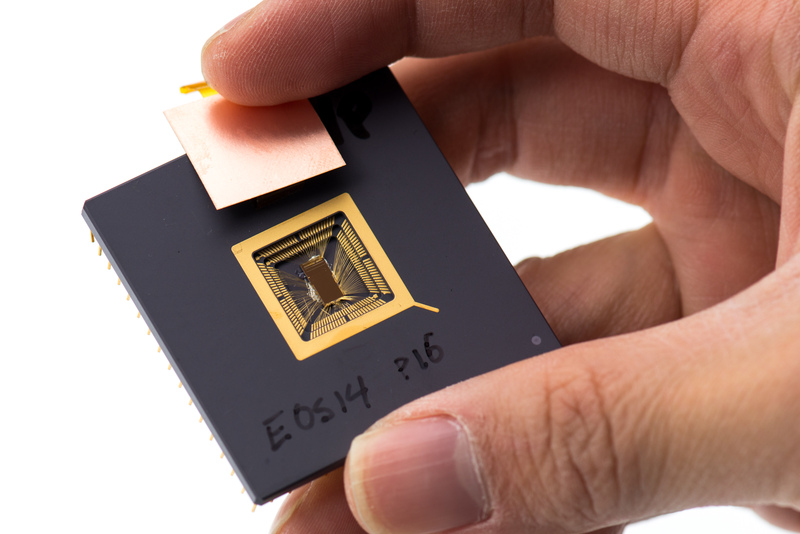
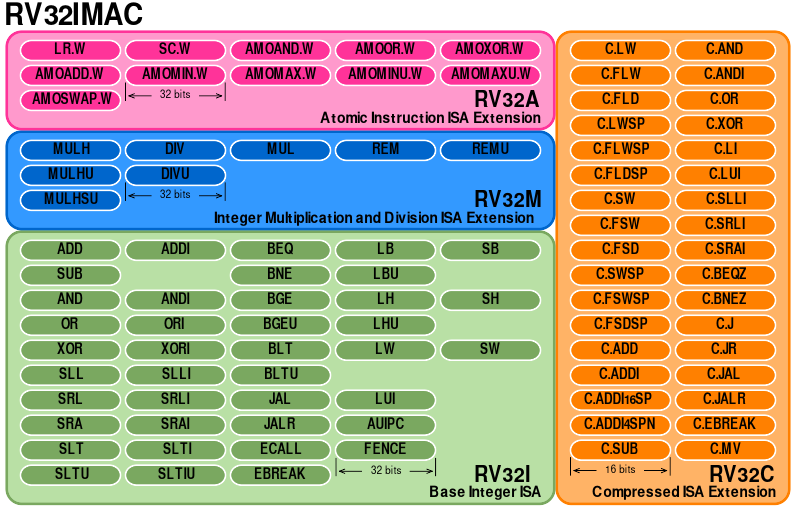
The architecture’s modular design is particularly compelling for specialized applications. The base RISC-V ISA provides essential integer operations, while optional extensions add floating-point arithmetic, atomic operations, and vector processing capabilities. This modularity allows designers to create processors optimized for specific use cases without paying for unnecessary features—a significant advantage in power-constrained and cost-sensitive applications.
Commercial Adoption and Industry Momentum
The commercial viability of RISC-V has been demonstrated through numerous implementations across various sectors. Major technology companies and semiconductor manufacturers have embraced the architecture for specific applications, recognizing the strategic value of processor independence and cost advantages.
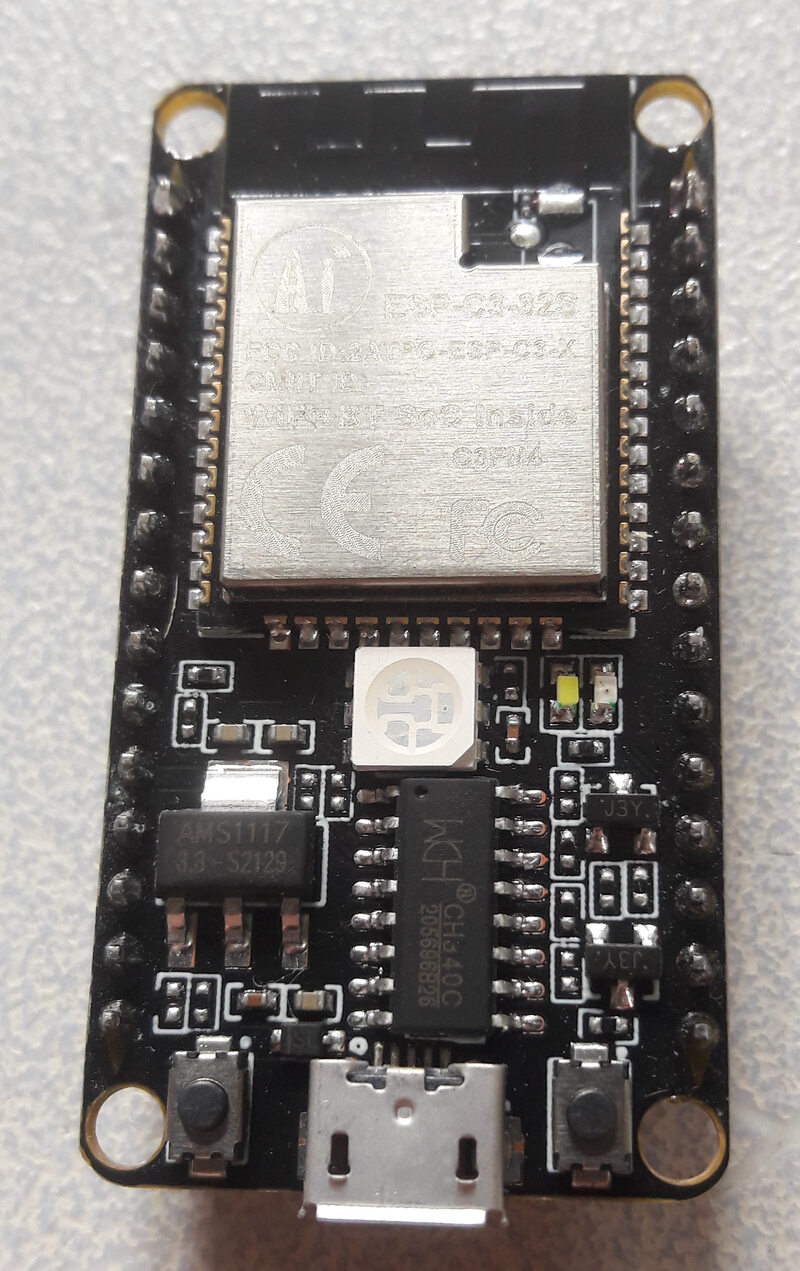
Espressif Systems has emerged as a key player in the RISC-V ecosystem with their ESP32-C3 microcontroller, which features a 32-bit RISC-V single-core processor running up to 160 MHz. The ESP32-C3 demonstrates how RISC-V can deliver competitive performance in the Internet of Things (IoT) market while offering developers greater flexibility and cost advantages compared to traditional ARM-based solutions.
SiFive, a commercial RISC-V processor company founded by the original UC Berkeley research team, has further accelerated adoption by providing ready-to-use RISC-V cores for various applications. Their success in securing significant funding and partnerships with major semiconductor companies validates the commercial potential of open-source processor designs.
Technical Advantages and Quantitative Performance Analysis
The technical benefits of RISC-V extend beyond cost savings to include measurable performance advantages in specific applications. The ESP32-C3’s single-core RISC-V processor achieves competitive performance at 160 MHz while consuming significantly less power than equivalent ARM Cortex-M4 implementations—approximately 20-30% lower power consumption in IoT applications due to its streamlined instruction set and optimized pipeline design.
Vector processing capabilities represent a particularly important development for AI and scientific computing workloads. The RISC-V Vector Extension (RVV) supports variable-length vector operations up to 2048-bit VLEN, enabling efficient parallel processing of matrix operations essential for neural network inference. Preliminary benchmarks show that RISC-V vector implementations can achieve 80-90% of the throughput of comparable ARM NEON implementations while offering greater flexibility in vector length configuration.
For materials science applications, RISC-V’s customizable instruction set offers unique advantages for computational chemistry and molecular dynamics simulations. Custom instructions can be implemented for specific operations like force field calculations, fast Fourier transforms for density functional theory (DFT), or specialized floating-point formats for extended precision calculations. This customization potential allows researchers to achieve 2-5x performance improvements in domain-specific computational kernels compared to general-purpose processors.
Recent research has highlighted the architecture’s suitability for educational purposes, with studies showing how open-source RISC-V implementations enable hands-on learning in computer architecture courses. The availability of complete processor designs allows students and researchers to understand and modify every aspect of processor operation—an impossibility with proprietary architectures.
For safety-critical applications, developments like SentryCore showcase RISC-V’s potential in automotive and industrial control systems. This reliable, real-time co-processor system demonstrates how open-source architectures can meet ISO 26262 ASIL-D safety requirements while providing the flexibility needed for complex control applications, with interrupt response times under 50 nanoseconds and deterministic execution guarantees.
Challenges and Future Prospects
Despite significant progress, the RISC-V ecosystem faces several challenges. The fragmentation risk—where different implementations create incompatible variants—remains a concern that RISC-V International actively addresses through standardization efforts. Software ecosystem maturity, particularly for high-performance applications, continues to lag behind established architectures.
However, these challenges are increasingly outweighed by the architecture’s advantages. The elimination of licensing fees removes significant barriers to innovation, particularly for startups and academic institutions. The open nature of RISC-V also addresses growing concerns about processor security and supply chain independence, as organizations can audit and modify the entire processor design.
The growing membership of RISC-V International, which now includes over 4,500 organizations worldwide as of 2026, demonstrates the industry’s commitment to open processor standards. This ecosystem includes major technology companies, semiconductor manufacturers, academic institutions, and government organizations, creating a diverse and sustainable foundation for continued development.
Implications for Semiconductor Innovation and Manufacturing
The success of RISC-V has broader implications for the semiconductor industry’s future, extending beyond design methodology to manufacturing and EDA tool ecosystems. From a process technology perspective, RISC-V designs have demonstrated successful implementation across multiple process nodes, from mature 28nm processes for IoT applications to advanced 7nm and 5nm nodes for high-performance computing. The open nature of the ISA has accelerated the development of specialized EDA tools, with companies like Cadence and Synopsys providing dedicated RISC-V verification and synthesis flows.
By demonstrating the viability of open hardware standards, RISC-V is inspiring similar efforts in other areas of chip design. This shift toward openness could fundamentally alter competitive dynamics in the semiconductor industry, reducing the power of incumbent players and enabling more rapid innovation through collaborative development models similar to those that transformed software development.
For companies in AI and materials science, RISC-V offers particular advantages in creating domain-specific accelerators. The ability to customize processors for specific workloads—such as transformer model inference, convolutional neural networks, or materials simulation kernels—without licensing constraints enables more efficient and cost-effective solutions. Custom RISC-V implementations can integrate specialized functional units for tensor operations, achieving performance densities of 100+ TOPS/W in 7nm processes, competitive with dedicated AI accelerators while maintaining software programmability.
The open-source nature of RISC-V also aligns with the collaborative research model that drives innovation in materials science. Academic researchers can freely share and build upon processor designs optimized for computational materials science, potentially accelerating the development of specialized hardware for density functional theory calculations, molecular dynamics simulations, and machine learning-driven materials discovery. This democratization of processor design could lead to breakthrough computational tools for understanding quantum materials, catalysis, and battery chemistry.
References
[1] “RISC-V - Semiconductor Engineering,” Semiconductor Engineering Knowledge Center. [Online]. Available: https://semiengineering.com/knowledge_centers/standards-laws/laws/risc-v/
[2] “RISC-V Challenges And Opportunities,” Semiconductor Engineering. [Online]. Available: https://semiengineering.com/risc-v-challenges-and-opportunities/
[3] “About RISC-V - RISC-V International,” RISC-V International. [Online]. Available: https://riscv.org/about/
[4] “Ratified Specifications - RISC-V International,” RISC-V International. [Online]. Available: https://riscv.org/technical/specifications/
[5] “News and Updates Archives - RISC-V International,” RISC-V International. [Online]. Available: https://riscv.org/news/
[6] “Blog - RISC-V International,” RISC-V International. [Online]. Available: https://riscv.org/blog/
[7] “RISC-V • Page 1 • Tag • The Register,” The Register. [Online]. Available: https://www.theregister.com/Tag/RISC-V/
[8] “RISC-V | TechCrunch,” TechCrunch. [Online]. Available: https://www.techcrunch.com/tag/risc-v/
[9] “RISC-V - Wikipedia,” Wikipedia. [Online]. Available: https://en.wikipedia.org/wiki/RISC-V
[10] “GitHub - riscv/riscv-isa-manual: RISC-V Instruction Set Manual · GitHub,” GitHub. [Online]. Available: https://github.com/riscv/riscv-isa-manual
This digest was generated by AaBot using real-time web and literature research.