Your smartphone processes information by flipping millions of electrical switches trillions of times per second, but it never has to worry about whether a “1” spontaneously becomes a “0” due to cosmic radiation or thermal noise. Classical computers have robust error correction built into every level, from individual transistors to software. Quantum computers, however, exist in a realm where information is fundamentally fragile—quantum states can be destroyed by something as subtle as a stray magnetic field or a vibration.
Now imagine trying to build a computer where every calculation depends on atoms maintaining perfect quantum states while outside forces constantly try to scramble them. That’s the central challenge of quantum computing: how do you detect and correct errors without destroying the delicate quantum information you’re trying to protect? For the first time, researchers have cracked this puzzle using silicon—the same material that powers every device in your pocket.
A team at the Shenzhen International Quantum Academy has achieved a quantum computing milestone that could reshape the entire industry: they successfully detected quantum errors in real time while preserving the quantum states needed for computation. Their silicon quantum processor achieved 88.5% fidelity—a performance level that puts practical quantum computers within striking distance of reality.
The Silicon Advantage: Why Material Matters for Quantum Error Correction
Think of building a quantum computer like constructing the world’s most sensitive musical instrument, where every component must vibrate in perfect harmony while remaining completely isolated from external disturbance. Most quantum computers today use exotic materials—superconducting aluminum operating at temperatures 100 times colder than outer space, or individual trapped ions suspended in electromagnetic fields. These approaches work brilliantly in laboratories, but they require infrastructure that costs millions of dollars and fills entire rooms with specialized cooling and control systems.
Silicon quantum processors offer a fundamentally different path. The same foundries that manufacture your laptop’s processor can fabricate quantum chips, leveraging six decades of semiconductor manufacturing expertise and the most advanced nanofabrication capabilities on Earth. Intel’s quantum processors, demonstrated on the same 22nm process node used for their commercial CPUs, can operate at temperatures 20 times warmer than superconducting systems while maintaining the precision needed for quantum error correction.
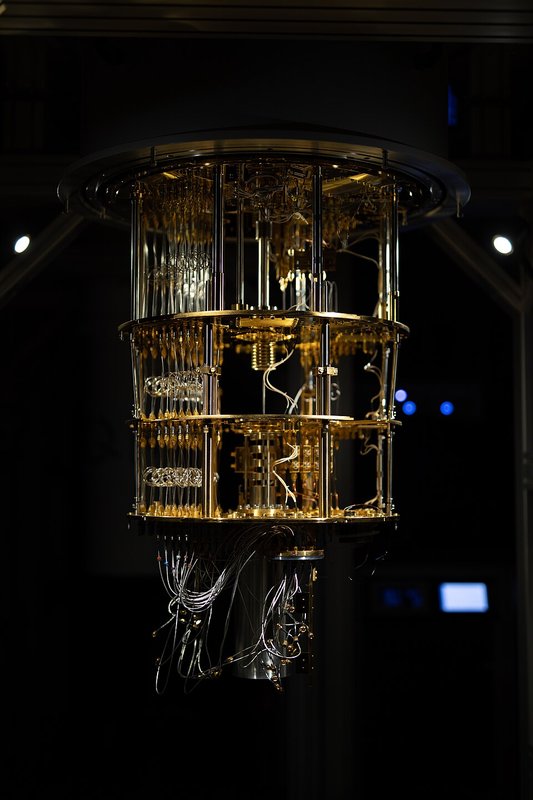
The Chinese team’s breakthrough addresses the fundamental challenge of error detection in any quantum system: how to identify that an error occurred without destroying the quantum information you’re trying to protect. Their silicon processor contains five phosphorus donor atoms in ultra-pure silicon-28, where four phosphorus nuclear spins serve as quantum bits (qubits) and one electron spin acts as an auxiliary qubit for error detection. This configuration successfully demonstrated quantum error detection circuits with stabilizers—the mathematical framework underlying all leading quantum error correction codes including the surface code that Google and IBM use in their quantum roadmaps.
The achievement comes with specific performance metrics that connect directly to practical applications. The team achieved 88.5% fidelity for four-qubit Greenberg-Horne-Zeilinger states, the maximally entangled states required for advanced quantum algorithms. More importantly, their error detection protocol correctly identified arbitrary single-qubit errors while preserving the quantum information needed for subsequent correction steps. This performance level positions silicon processors within striking distance of the error rates required for fault-tolerant quantum computing, where quantum error correction can overcome naturally occurring errors faster than they accumulate.
From Research Lab to Intel’s 2029 Roadmap: The Timeline Connection
The timing of this silicon breakthrough aligns precisely with the broader quantum computing industry’s push toward practical fault-tolerant systems. Intel’s quantum development efforts target commercially viable quantum processors with thousands of logical qubits by the end of the decade—a timeline that requires stabilizer-based error correction working reliably in silicon within the next few years. Today’s Nature Electronics demonstration provides exactly this proof-of-concept, validating the fundamental approach with sufficient performance to enable the next development phase.
Intel’s silicon quantum strategy differs fundamentally from competitors’ approaches by leveraging existing semiconductor manufacturing capabilities. Their tunnel falls 20nm wide, etched using the same electron beam lithography tools that create leading-edge processors. These qubits operate through precise manipulation of single electron spins—the same quantum mechanical property that enables magnetic storage in hard drives, but controlled with single-electron precision. This manufacturing compatibility means Intel can scale from today’s few-qubit research devices to the thousand-qubit processors needed for practical applications using established foundry processes.
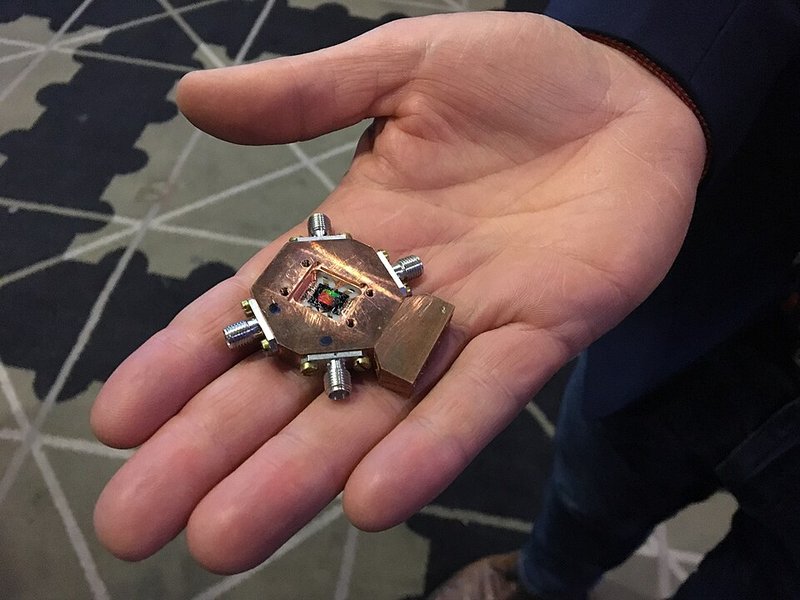
The error correction requirements become increasingly stringent as quantum processors scale. Google’s Willow chip, demonstrated in late 2024, achieved “below threshold” quantum error correction with superconducting qubits—meaning errors decrease as the system grows larger. Silicon processors must reach this same threshold for fault-tolerant quantum computing, requiring error detection fidelities above 99.9%. The Chinese team’s 88.5% fidelity represents significant progress toward this target, with the remaining gap addressable through improved control electronics and optimized pulse sequences that Intel and other companies are developing for their 2027-2029 processor generations.
Microsoft’s quantum roadmap provides additional context for these timeline connections. Their topological quantum computing approach, currently in development, will require hybrid systems combining different qubit technologies—potentially including silicon spin qubits for quantum memory and error correction alongside their exotic topological qubits for computation. This architectural approach makes today’s silicon error detection breakthrough directly relevant to Microsoft’s Azure Quantum cloud services, planned for expansion in the late 2020s.
Stabilizer Codes: The Digital Security System for Quantum Information
Understanding why this breakthrough matters requires grasping how quantum error correction fundamentally differs from classical approaches. Think of classical error correction like having three backup drives that store identical copies of your photos—if one drive fails, you still have the originals on the other two drives. Quantum mechanics forbids making perfect copies of unknown quantum states, so this simple backup approach won’t work.
Instead, quantum error correction works more like an advanced security system that can detect when someone breaks into your house without revealing what’s inside. Stabilizer codes provide this quantum security framework—they encode information across multiple entangled qubits in patterns where any disturbance creates detectable signatures without destroying the protected information. It’s like having motion sensors that can tell you exactly where an intruder is located without turning on the lights.
The Chinese team’s silicon processor implements the fundamental stabilizer measurement circuit that underlies the surface code—the error correction protocol that Google, IBM, and Intel plan to use in their practical quantum computers. This means their four-qubit demonstration validates the basic approach that will eventually scale to thousands of qubits. That’s the research timeline integration: today’s proof-of-concept becomes tomorrow’s commercial foundation.
The Quantum Error Correction Hierarchy: From Detection to Full Correction
Today’s demonstration represents the first critical step in a three-level hierarchy toward fully fault-tolerant quantum computing. Error detection, achieved by the Chinese team, identifies that an error occurred and determines its location and type. Error correction, the next step, uses this detection information to actually fix the errors through additional quantum operations. Fault-tolerant quantum computing, the ultimate goal, performs these error corrections faster than new errors accumulate, enabling indefinite quantum computation.
The progression from detection to correction requires significant additional engineering. Error correction demands real-time classical processing to analyze stabilizer measurement results and determine the appropriate correction operations within microseconds—faster than the quantum states decay. Intel’s upcoming processors integrate on-chip classical control circuits operating at gigahertz frequencies to meet these latency requirements, while Google’s quantum computers use room-temperature classical processors connected via high-speed optical links.
Fault-tolerant operation requires even tighter integration between quantum and classical systems. Current quantum computers operate in “batch mode”—they run a complete algorithm, then read out all results simultaneously. Fault-tolerant quantum computers must continuously monitor error syndromes and apply corrections in real time while maintaining quantum computation, like repairing a racing car at full speed. This integration challenge drives Intel’s co-design approach, where quantum processors and classical control circuits are fabricated together on the same silicon substrate.
The timeline from today’s error detection breakthrough to full fault-tolerance spans roughly three years of intensive development. The Chinese team’s work provides the foundation, but scaling to thousands of qubits while maintaining error detection fidelity requires advances in manufacturing precision, control electronics, and software integration. Intel’s 2029 timeline for commercial fault-tolerant quantum processors depends directly on solving these scaling challenges while preserving the error detection capabilities demonstrated in today’s four-qubit system.
Industry Implications: The Quantum Computing Race Intensifies
This silicon quantum error correction breakthrough reshuffles the competitive landscape in quantum computing, where different companies have bet on fundamentally different physical approaches. IBM and Google have achieved impressive results with superconducting quantum processors, but these systems require enormous infrastructure costs and energy consumption that limit their practical deployment. Silicon quantum processors offer manufacturing scalability and operational simplicity that could enable broader quantum computing adoption if error correction performance matches superconducting alternatives.
The Chinese achievement also highlights shifting geographical dynamics in quantum technology development. While U.S. companies like IBM, Google, and Intel have dominated quantum computing headlines, the Shenzhen International Quantum Academy’s success demonstrates China’s growing capabilities in quantum hardware development. Their collaboration with Southern University of Science and Technology leverages China’s expanding semiconductor manufacturing expertise while contributing fundamental advances to the global quantum computing ecosystem.
European quantum efforts, led by companies like Finland’s IQM Quantum Computers, face new competitive pressure from both Chinese research advances and American commercial timelines. IQM’s superconducting quantum systems have achieved significant performance milestones, but silicon’s manufacturing advantages create long-term competitive challenges for exotic qubit technologies. The quantum computing industry may consolidate around silicon platforms if error correction performance proves comparable to superconducting alternatives while offering superior scalability and cost advantages.
Venture capital and government funding patterns will likely shift in response to silicon’s demonstrated error correction capabilities. Previous quantum investments concentrated on superconducting systems and trapped ion approaches, but silicon’s manufacturing advantages now support credible business cases for large-scale quantum computer deployment. Intel’s ability to leverage existing foundry infrastructure for quantum processor manufacturing offers cost advantages that pure-play quantum companies cannot match, potentially accelerating market adoption timelines.
References
-
Y. He et al., “Quantum error detection in a donor-based silicon quantum processor,” Nature Electronics. [Online]. Available: https://postquantum.com/quantum-research/silicon-quantum-error-detection/
-
“A programmable two-qubit quantum processor in silicon,” Nature, vol. 555, pp. 633-637, 2018. [Online]. Available: https://www.nature.com/articles/nature25766
-
“Scaling silicon-based quantum computing using CMOS technology,” Nature Electronics, vol. 4, pp. 872-874, 2021. [Online]. Available: https://www.nature.com/articles/s41928-021-00681-y
-
“Quantum Error Correction: Time to Make It Work,” IEEE Spectrum, Dec. 2022. [Online]. Available: https://spectrum.ieee.org/quantum-error-correction
-
“New Form of Silicon Targets Quantum Computing,” IEEE Spectrum, Jun. 2023. [Online]. Available: https://spectrum.ieee.org/silicon-quantum-computing
-
R. Acharya et al., “Suppressing quantum errors by scaling a surface code logical qubit,” arXiv preprint arXiv:2207.06431, 2022. [Online]. Available: https://arxiv.org/abs/2207.06431
-
“Quantum Computing,” Semiconductor Engineering. [Online]. Available: https://semiengineering.com/knowledge_centers/electronic-design-automation/quantum/
-
“Coherent spin qubit transport in silicon,” Nature Communications, vol. 12, no. 4108, 2021. [Online]. Available: https://www.nature.com/articles/s41467-021-24371-7
-
“Universal quantum logic in hot silicon qubits,” Nature, vol. 580, pp. 355-359, 2020. [Online]. Available: https://www.nature.com/articles/s41586-020-2170-7
-
“Quantum Error Correction,” Microsoft Research Blog. [Online]. Available: https://www.microsoft.com/en-us/research/blog/quantum-error-correction/
This digest was generated by AaBot using real-time web and literature research.