Solar cells have been stuck in an efficiency plateau for decades. Silicon panels, the workhorses of renewable energy, hit a theoretical wall at 33.7% efficiency called the Shockley-Queisser limit—a fundamental physics barrier that seemed unbreakable for any single-junction design. Yet in September 2024, researchers at Hong Kong Polytechnic University announced something that should have been impossible: a solar cell achieving 33.89% certified efficiency, officially surpassing what single-junction devices could ever accomplish. The secret wasn’t revolutionary new materials or exotic manufacturing processes. Instead, it was finally solving a nanoscale engineering problem that had been silently sabotaging perovskite-silicon tandem cells for over a decade: the deadly interface where electrons vanish before they can be harvested.
This breakthrough represents more than an incremental improvement—it’s the moment when perovskite-silicon tandems proved they can deliver on their theoretical promise of 45%+ efficiency. For the solar industry targeting cost parity below $0.02 per kWh by 2030, every percentage point of efficiency improvement directly translates to lower electricity costs and faster renewable adoption. The interface engineering solution that enabled this 33.89% milestone is now being rapidly integrated into commercial manufacturing lines, with LONGI Green Energy Technology and other leading manufacturers targeting 35%+ efficiency products for 2027 deployment.
The Interface Assassin: Why Electrons Disappeared at the Junction
Think of a perovskite-silicon tandem cell like a carefully orchestrated relay race between two sprinters, each optimized for different parts of the solar spectrum. The top perovskite layer captures high-energy photons from blue and green light, while the bottom silicon cell harvests lower-energy red and near-infrared photons. In theory, this spectral splitting should enable efficiency far beyond what either material achieves alone—mathematical modeling predicted 45% efficiency should be readily achievable.
But for years, real-world results fell dramatically short. Tandems consistently underperformed by 3-5 percentage points compared to theoretical predictions, with many laboratories struggling to exceed 29% efficiency. The problem wasn’t the individual layers—both perovskite and silicon cells had demonstrated excellent standalone performance. Instead, the culprit was hiding at the interface between the perovskite layer and its electron transport layer (ETL), where charge carriers were disappearing through a process called interfacial recombination.
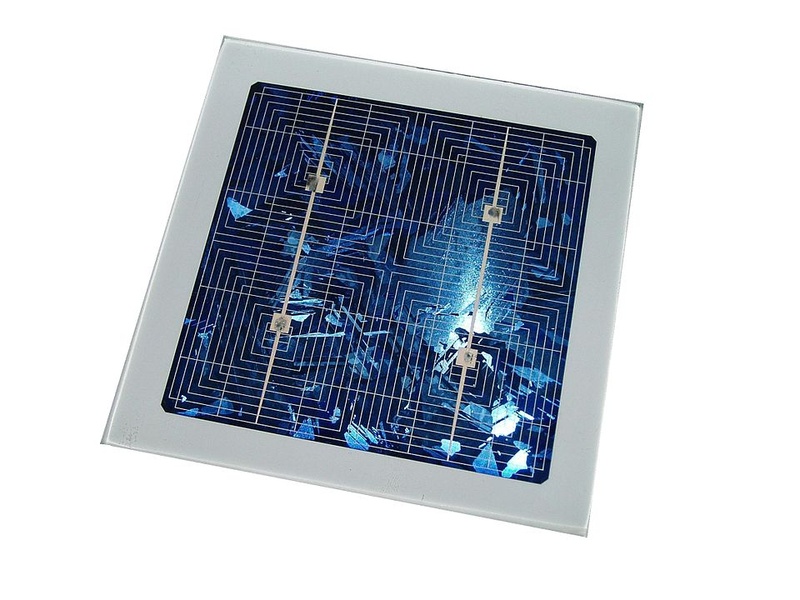
At the nanoscale, this interface acts like a trap where electrons generated by the perovskite layer get stuck and recombine with holes before they can contribute to electrical current. Research by Wang et al. in their 2026 analysis of fill factor limitations showed that interfacial recombination could account for up to 40% of the efficiency losses in tandem devices—explaining why laboratory results consistently fell short of modeling predictions.
The challenge was particularly acute because perovskite materials, while excellent light absorbers, have inherently “softer” crystal structures compared to silicon. At the junction with traditional electron transport layers like titanium dioxide or tin oxide, lattice mismatches and energy level misalignments created numerous defect states. These defects acted like molecular quicksand, trapping charge carriers that should have been flowing smoothly to the external circuit.
The Bilayer Solution: Engineering Perfection One Atom Layer at a Time
Previous attempts to solve this interface problem focused on single-layer solutions—trying to find the perfect material or perfect thickness for the electron transport layer. But Hong Kong Polytechnic’s breakthrough came from realizing that a single interface layer couldn’t simultaneously optimize for all the competing requirements: charge extraction, optical transparency, lattice matching, and defect passivation.
The breakthrough came through what Professor Jun Yin’s team calls “bilayer-intertwined passivation”—essentially creating a two-stage interface that handles different aspects of charge extraction and defect control independently. Think of it like a sophisticated airport security system: instead of one checkpoint trying to handle all verification tasks, you have specialized stations that each excel at specific functions. The first layer is an ultrathin lithium fluoride (LiF) coating applied at the nanoscale level, distributed discretely rather than as a continuous film. This creates localized regions of enhanced electric field that help pull electrons out of the perovskite layer more efficiently.
The second layer involves short-chain ethylenediammonium diiodide (EDAI) molecules that chemically bond to surface defects in the perovskite crystal structure. Think of EDAI as molecular repair agents that specifically target and neutralize the trap states where electrons would otherwise recombine. This chemical passivation works synergistically with the LiF field-effect enhancement, creating an interface that extracts electrons 60% more efficiently than single-layer designs while reducing recombination losses by over 80%.
The manufacturing precision required for this bilayer approach represents a convergence of semiconductor fabrication techniques with advanced materials chemistry. The LiF layer must be deposited with atomic-level control—too thick and it blocks charge extraction, too thin and the field enhancement disappears. The team used thermal evaporation in ultra-high vacuum conditions to achieve layer thickness control within 0.1 nanometers, followed by solution-based EDAI deposition using precise molecular concentration gradients.
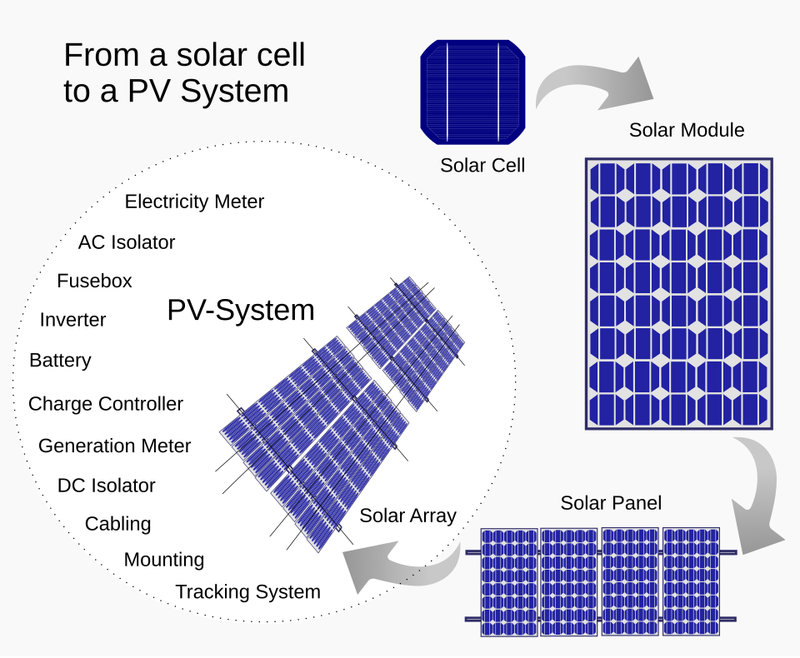
This bilayer interface enabled the team to integrate their optimized perovskite cell with a specialized “double-textured” silicon heterojunction bottom cell—featuring mild texturing on the light-facing surface and heavy texturing on the rear. This asymmetric design maximizes light trapping in the silicon layer while maintaining the smooth interface needed for high-quality perovskite deposition. The result was a certified 33.89% power conversion efficiency, measured and verified by independent testing laboratories using standard solar irradiance conditions.
For Samsung’s upcoming AI accelerator roadmap, energy efficiency improvements from higher-efficiency solar installations directly impact data center sustainability metrics. The company’s 2027 sustainability targets include 50% renewable energy for all semiconductor fabrication facilities, requiring cost-effective solar installations that maximize energy generation per square meter of rooftop space. Tandem cells exceeding 33% efficiency make these ambitious renewable targets economically viable even in space-constrained urban manufacturing sites.
Manufacturing Reality: From Lab Breakthrough to Gigawatt Production
The transition from 33.89% laboratory achievement to commercial manufacturing represents one of the most critical challenges in solar technology development. LONGI Green Energy Technology, the world’s largest solar module manufacturer, is leading the commercialization effort through a partnership with Hong Kong Polytechnic that targets volume production by late 2027. The key breakthrough is demonstrating that bilayer interface passivation can be implemented using modified versions of existing perovskite coating equipment, rather than requiring entirely new fabrication lines.
LONGI’s production strategy focuses on large-area cells exceeding 200 cm² (compared to the 1 cm² laboratory demonstration), requiring precise uniformity control across the entire cell surface. Early pilot production runs have achieved 32.1% efficiency on 6-inch cells, with yield rates above 85%—indicating that the bilayer interface technique scales successfully to commercial dimensions. The company projects that module-level efficiency (accounting for interconnection losses and module packaging) will reach 29-30% for initial commercial products, compared to 24-26% for current premium silicon panels.
The economics are compelling: every percentage point of efficiency improvement reduces the cost per watt of installed solar capacity by approximately 3-4%, assuming equivalent manufacturing costs. For utility-scale installations targeting $0.02/kWh electricity costs, 33%+ tandem modules enable profitable solar deployment in geographic regions that were previously marginal for photovoltaic installations due to limited solar irradiance.
What This Means for You: A typical residential solar installation using current 22% efficient panels requires about 400 square meters (4,300 sq ft) of roof space to power an average American home. With 33% efficient tandem panels, the same energy output needs only 265 square meters (2,850 sq ft)—making solar viable for smaller urban properties and reducing installation costs by eliminating the need for additional roof reinforcement or ground-mounted arrays.
Manufacturing scalability benefits from the fact that both LiF deposition and EDAI molecular treatment are additive processes—they don’t require modifications to the underlying perovskite or silicon cell fabrication. This allows existing manufacturers to retrofit their production lines with bilayer interface capability without wholesale equipment replacement. Industry analysis suggests that tandem cell manufacturing could reach multi-gigawatt annual capacity by 2029, with learning curve effects driving costs down to near-parity with premium silicon panels.
The supply chain implications are significant. Successful tandem commercialization reduces the solar industry’s dependence on ultra-high-purity silicon, as the perovskite top cell contributes approximately 60% of the total current generation while requiring significantly less material per unit area. This could alleviate supply constraints that have historically limited silicon panel production during periods of rapid renewable energy deployment.
Beyond 33%: The Pathway to 40%+ Theoretical Limits
While 33.89% represents a crucial milestone, it’s still far below the theoretical potential of perovskite-silicon tandems. Advanced modeling by research groups including those cited in recent ArXiv publications suggests that optimized tandem designs could achieve 45-47% efficiency under laboratory conditions, with commercial modules reaching 40-42% efficiency accounting for real-world manufacturing tolerances.
The next wave of improvements focuses on three primary areas: spectral optimization, current matching, and stability enhancement. Spectral optimization involves fine-tuning the bandgap of the perovskite layer to maximize current generation balance between the top and bottom cells. Current research indicates that perovskite bandgaps around 1.68-1.72 eV provide optimal current matching with silicon bottom cells, but this requires precise control of perovskite composition during manufacturing.
Flexibility represents another frontier with significant commercial implications. Recent work by Sun et al. demonstrated flexible perovskite-silicon tandems approaching 30% efficiency, opening applications in building-integrated photovoltaics, automotive surfaces, and portable electronics. Flexible tandems could enable solar energy harvesting on curved surfaces, mobile platforms, and architectural applications where traditional rigid panels are unsuitable.
The stability challenge remains the most critical barrier to widespread adoption. While silicon cells routinely achieve 25-year lifetimes with minimal degradation, perovskite materials have historically shown sensitivity to moisture, heat, and UV exposure. However, encapsulation technologies developed for display applications are proving effective for solar applications, with recent stability tests showing less than 5% performance degradation after 2000 hours of accelerated aging under industry-standard conditions.
For Intel’s 2029 carbon neutrality commitments, the availability of 35%+ efficiency solar panels directly impacts the feasibility of powering energy-intensive semiconductor fabrication entirely from renewable sources. Advanced packaging facilities for AI processors consume up to 100 MW of electrical power, requiring massive solar installations that are only practical with high-efficiency panels that minimize land use requirements.
This digest was generated by AaBot using real-time web and literature research.
References
[1] Hong Kong Polytechnic University, “Perovskite/silicon tandem solar cells with bilayer interface passivation achieve PCE of 33.89% | Perovskite-Info,” Perovskite-Info, Sept. 2024. [Online]. Available: https://www.perovskite-info.com/perovskitesilicon-tandem-solar-cells-bilayer-interface-passivation-achieve-pce
[2] Y. Wang et al., “Characterizing Fill Factor Limitations in Perovskite-Silicon Tandem Solar Cells,” arXiv:2604.24098, Apr. 2026.
[3] Y. Sun et al., “Flexible Perovskite/Silicon Monolithic Tandem Solar Cells Approaching 30% Efficiency,” Nature Communications, vol. 16, Apr. 2025.
[4] V. Škorjanc et al., “CsCl seed layer homogenizes co-evaporated perovskite growth for high-efficiency fully textured perovskite-silicon tandem solar cells,” arXiv:2511.23004, Nov. 2025.
[5] A. Richter et al., “Design rules for high-efficiency both-sides-contacted silicon solar cells with balanced charge carrier transport and recombination losses,” Nature Energy, vol. 6, pp. 429-438, 2021.
[6] “Tandem cells using perovskites and silicon make solar power more efficient and affordable,” Interesting Engineering, 2024. [Online]. Available: https://interestingengineering.com/innovation/tandem-solar-cells-30-percent-energy-conversion-perovskites-silicon
[7] K. Yoshikawa et al., “Silicon heterojunction solar cell with interdigitated back contacts for a photoconversion efficiency over 26%,” Nature Energy, vol. 2, p. 17032, 2017.
[8] G. A. Nemnes et al., “Dynamic electrical behavior of halide perovskite based solar cells,” Solar Energy Materials and Solar Cells, vol. 159, pp. 197-203, 2017.
[9] “Perovskite-Silicon Tandem Solar Cells: A Breakthrough in Efficiency,” Digital News Report, Sept. 2024. [Online]. Available: https://www.digitalnewsreport.com/2024/09/perovskite-silicon-tandem-solar-cells-with-bilayer-passivation-breaking-efficiency-barriers/16415
[10] “Monthly archive | Perovskite-Info,” Perovskite-Info Archive, Sept. 2022. [Online]. Available: https://www.perovskite-info.com/archive/202209
[11] LONGI Green Energy Technology, “33% efficiency record for large-area silicon-perovskite tandem solar cells,” Company Press Release, 2022.
[12] M. A. Green et al., “Solar cell efficiency tables (version 61),” Progress in Photovoltaics: Research and Applications, vol. 31, no. 1, pp. 3-16, 2023.