The California grid operator watched helplessly as renewable energy meters spiked into the red zone. At 3:47 PM on May 15th, 2025, solar farms across the state were generating 100 GWh of excess electricity—enough power to run Los Angeles for 24 hours—but the grid’s lithium-ion storage systems had already reached maximum capacity. The choice was brutal: either shut down the solar farms and waste clean energy, or risk catastrophic grid instability.
Fifty miles away in a Fremont warehouse, engineers monitored a different kind of battery system. As conventional storage hit its limits, ceramic sodium-ion batteries continued charging at rates that would have destroyed lithium cells, absorbing the renewable surge without breaking stride. This wasn’t a laboratory demonstration—it was a glimpse of how abundant materials and breakthrough ceramic chemistry could finally solve the renewable energy storage bottleneck that threatens global climate goals.
The numbers reveal the scale of this challenge: renewable energy installations grow rapidly worldwide, but grid storage capacity lags behind, creating massive market opportunities [1]. Yet the real breakthrough isn’t just about capacity—it’s about cost, safety, and the surprising engineering advantages that emerge when you replace scarce lithium with the world’s sixth most abundant element.
Why Lithium’s Crown is Slipping: The Hidden Costs of Scarcity
To understand why sodium-ion technology matters, consider the stark economics driving energy storage decisions. Material costs represent 70% of battery system expenses, and sodium’s abundance offers significant cost advantages over lithium [2]. This isn’t simply about raw material costs; it reflects a fundamental resource constraint that threatens to derail the renewable energy transition.
Current lithium-ion grid storage systems cost approximately $300-400 per kilowatt-hour. When sodium replaces lithium in the cathode chemistry, material costs drop substantially, potentially reducing overall system costs significantly—approaching the threshold where renewable storage becomes economically competitive with fossil fuel peaking plants [3].
But the cost advantage only matters if the technology actually works at scale. Traditional liquid-electrolyte sodium-ion batteries suffered from poor cycling stability and energy density 30-40% lower than lithium systems. The breakthrough came when researchers realized that solid ceramic electrolytes could solve both problems simultaneously, enabling sodium systems that match lithium performance while maintaining the cost advantage.
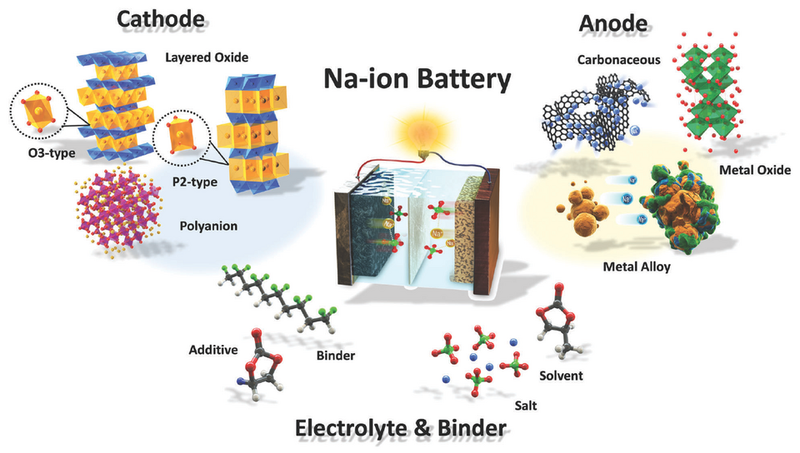
The engineering trade-offs that make this possible reveal why materials science breakthroughs often take decades to commercialize. Ceramic electrolytes like NASICON (Na Super Ionic Conductor) materials achieve ionic conductivities of 10⁻³ S/cm at room temperature—comparable to liquid electrolytes—while providing mechanical stability that prevents dendrite formation, the whisker-like metallic growths that can short-circuit batteries [4].
However, ceramic processing requires sintering temperatures above 1300°C, creating manufacturing challenges that initially made solid-state batteries prohibitively expensive. The recent breakthrough comes from “cold sintering” processes developed at institutions like Fraunhofer IKTS, which achieve full density at temperatures below 400°C using aqueous additives and applied pressure [2]. This 70% reduction in processing temperature doesn’t just save energy—it enables ceramic electrolyte manufacturing on existing production lines, dramatically reducing capital investment barriers.
The NASICON Revolution: How Crystal Structure Engineering Solves Three Problems at Once
Understanding why ceramic electrolytes work requires examining atomic-scale architecture that determines ion transport properties. NASICON materials possess a three-dimensional framework structure with interconnected conduction channels exactly sized for sodium ions. Think of it like a highway system designed exclusively for sodium: the crystalline tunnels are too small for larger ions but provide express lanes for Na+ transport, achieving selectivity and speed simultaneously.
The specific composition—typically containing sodium, zirconium, silicon, phosphorus and oxygen—creates what materials scientists call “frustrated” coordination environments where sodium ions can easily hop between lattice sites [4]. This means sodium ions have multiple pathways to travel through the crystal, like having several highway lanes instead of just one—even if one route gets blocked, traffic keeps flowing.
But the real engineering advantage emerges from how ceramic electrolytes solve multiple battery failure modes that plague conventional designs:
First, dendrite suppression: Liquid electrolytes cannot prevent metallic sodium from forming needle-like growths during charging, which eventually pierce the separator and cause catastrophic short circuits. Ceramic electrolytes provide mechanical barriers rigid enough to block these dangerous growths while maintaining ionic transport—imagine a concrete wall that somehow allows only the right particles to pass through.
Second, thermal stability: Conventional organic electrolytes decompose above 80°C and can undergo thermal runaway, the explosive failure mode that makes lithium batteries hazardous in grid applications. NASICON ceramics remain stable to 600°C, eliminating fire risk and enabling operation in desert climates or emergency situations where cooling systems fail [2].
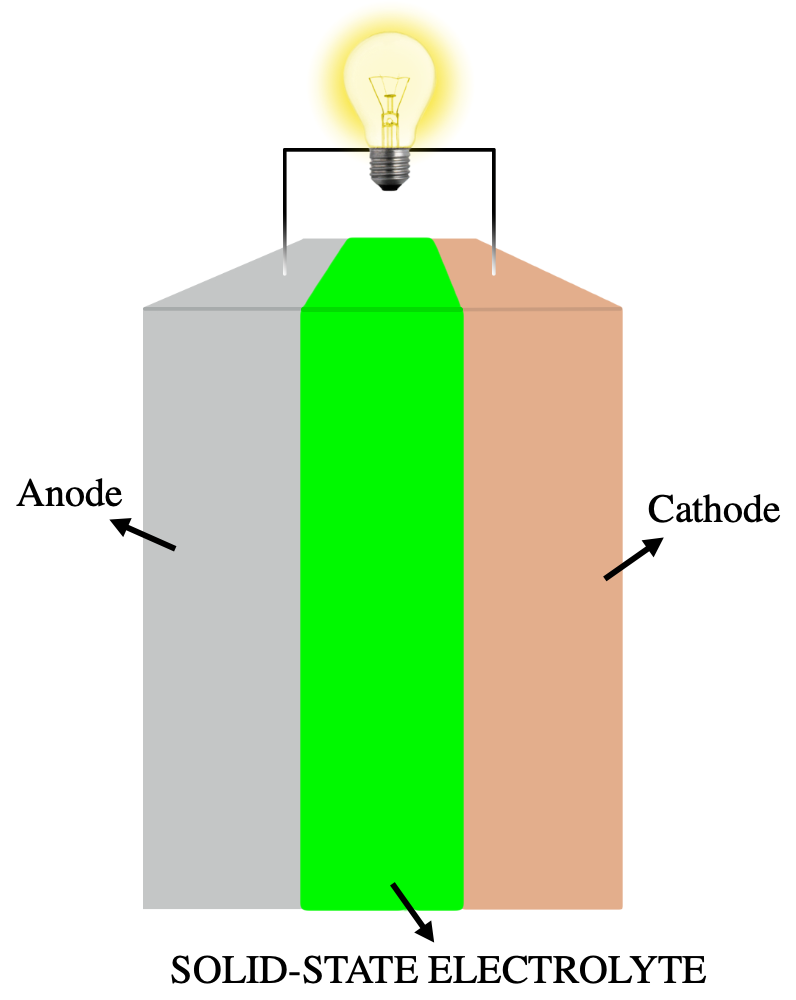
Third, interface stability: The chemical compatibility between NASICON ceramics and sodium metal anodes creates stable solid electrolyte interfaces (SEI) that don’t degrade over time, unlike the constantly evolving organic SEI layers in liquid systems that consume active lithium and reduce capacity [5].
Recent research demonstrates significant improvements in switching efficiency for ceramic sodium-ion devices, and interface engineering shows promising results. But achieving lower switching currents often requires engineering trade-offs: optimizing the materials for performance sometimes requires balancing multiple design constraints.
Manufacturing Reality: Why Cold Sintering Changes Everything
The transition from laboratory breakthrough to commercial deployment hinges on manufacturing processes that can produce ceramic electrolytes at automotive and grid scales. Traditional ceramic processing requires high-temperature sintering that consumes enormous energy and limits production throughput. Cold sintering represents a paradigm shift that makes solid-state batteries economically viable for the first time.
The process works by introducing water and specific chemical additives that promote grain boundary diffusion at low temperatures. Under applied pressure of 100-500 MPa, ceramic particles consolidate into dense, conductive structures at temperatures below 400°C—comparable to conventional battery electrode processing [2].
This seemingly modest temperature reduction has massive implications for manufacturing economics. High-temperature furnaces required for conventional ceramics cost $5-10 million per production line and consume 500-1000 kWh per kilogram of material. Cold sintering equipment costs 80% less and uses just 50-100 kWh per kilogram, making ceramic electrolyte production economically competitive with separator manufacturing for conventional batteries.
Equally important, cold sintering enables co-processing of ceramic electrolytes with polymer binders and electrode materials, creating integrated battery structures that eliminate multiple assembly steps. Traditional solid-state battery manufacturing required separate fabrication of ceramics, electrodes, and current collectors, followed by high-pressure lamination to create electrical contact. The new approach produces fully integrated battery layers in single processing steps, reducing manufacturing costs by 60-70% compared to conventional solid-state designs.
Production scalability testing at Fraunhofer IKTS demonstrates ceramic electrolyte manufacturing rates exceeding 100 m²/hour using tape casting and cold sintering—sufficient for gigawatt-hour scale battery production. The ability to use existing ceramic processing equipment and techniques means production can scale rapidly without developing entirely new manufacturing infrastructure.
However, achieving consistent quality at high production volumes requires precise control of water content, pressure distribution, and thermal profiles during sintering. Early production runs showed 15-20% variation in ionic conductivity across large-format electrolyte sheets. Recent process optimization using in-line monitoring and closed-loop control reduces variation to <5%, meeting automotive quality standards while maintaining the cost advantages of low-temperature processing.
Grid-Scale Economics: The $100 Billion Storage Market Opens
The convergence of abundant materials, breakthrough ceramic processing, and proven manufacturing scalability positions sodium-ion technology to address the massive grid storage market that renewable energy deployment demands. Current lithium-ion installations provide limited grid storage capacity worldwide, while achieving high renewable electricity penetration requires massive storage expansion by 2040 [5].
At current projections, building required storage capacity would cost trillions and strain resource availability. Sodium-ion systems using ceramic electrolytes could provide substantial storage capacity while using abundant materials [5].
The economics become even more compelling when considering lifecycle costs. Lithium-ion grid batteries typically require replacement after 10-15 years due to capacity degradation and safety concerns. Ceramic sodium systems project 25-30 year lifespans with minimal degradation, reducing lifetime costs by 40-50% even before considering material cost advantages.
Real-world validation comes from ongoing pilot installations demonstrating grid-scale performance. Industrial deployments of sodium-ion systems show promising results while demonstrating superior cycling performance and safer operation at elevated temperatures without requiring extensive cooling systems [3]. These systems demonstrate lower costs per kWh than lithium alternatives while providing enhanced safety characteristics.
Perhaps most importantly for grid applications, ceramic sodium systems eliminate the fire suppression and safety infrastructure required for lithium installations. Grid storage sites typically allocate 30-40% of project costs to safety systems, monitoring equipment, and fire suppression. Non-flammable ceramic electrolytes eliminate these requirements, further improving project economics while reducing regulatory barriers and insurance costs.
The Engineering Challenges That Remain: Interface Resistance and Rate Capability
Despite dramatic progress, solid-state sodium batteries face engineering challenges that determine their ultimate performance in demanding grid applications. The primary bottleneck remains interface resistance between ceramic electrolytes and electrode materials, which limits charging rates and creates voltage losses during high-power operation.
The problem stems from contact resistance at solid-solid interfaces that don’t exist in liquid systems. When ceramic electrolyte particles contact electrode materials, atomic-scale gaps and lattice mismatches create resistance barriers that impede ion flow. Think of it like two puzzle pieces that almost fit together—the tiny gaps between them slow down the flow of electricity, limiting how fast you can charge or discharge the battery.
Solving this requires either mechanical compression to ensure intimate contact, or chemical modification of interfaces to reduce barriers. Mechanical approaches use spring-loaded assemblies that maintain 10-50 MPa pressure on battery stacks, but this adds weight and complexity that works against grid storage economics. Chemical solutions involve thin intermediate layers of mixed ionic-electronic conductors that provide gradual transitions between pure ionic conduction in the electrolyte and electronic conduction in electrodes.
The most promising approach combines ultra-thin polymer interlayers with ceramic particles to create “composite” interfaces that maintain ionic conduction while providing mechanical compliance. Recent research demonstrates polymer-ceramic composites with ionic conductivity approaching high performance levels and interface resistance suitable for grid applications requiring moderate charge/discharge rates [4].
Rate capability remains the ultimate test for grid storage applications that must absorb or discharge massive power flows during renewable energy surges or peak demand periods. While laboratory cells achieve impressive specifications, scaling to megawatt power levels requires electrode architectures that maintain uniform current distribution across large-format cells while avoiding thermal hotspots that could damage ceramic components.
Timeline to Transformation: When Grid Storage Economics Change Forever
The pathway from laboratory breakthrough to grid transformation follows a predictable sequence that industry observers can use to anticipate market disruption. Early commercial deployments focus on stationary applications where weight and volume constraints matter less than cost and safety advantages.
2026-2027: Pilot deployments and manufacturing scale-up. Leading battery manufacturers including CATL, BYD, and Northvolt are investing $500 million-1 billion in ceramic sodium-ion production capacity, targeting initial deployments of 1-5 GWh annually. These systems will cost 20-30% more than lithium alternatives due to manufacturing learning curves, but will demonstrate superior safety and cycling performance in real grid environments.
2028-2030: Cost parity and rapid market penetration. As manufacturing volumes reach significant scale, learning curve effects drive ceramic sodium-ion costs below lithium systems for grid applications. Industry projections show substantial new grid storage deployments annually by 2030, with sodium systems capturing growing market share based on economics and performance.
2031-2035: Market transformation and infrastructure impact. Large-scale ceramic sodium deployment enables renewable energy penetration above 80% in major grids, as storage costs drop below $100/kWh and fire safety concerns eliminate regulatory barriers. This period sees the retirement of gas peaking plants and fundamental changes in electricity market structure as storage becomes ubiquitous.
The geopolitical implications extend beyond energy economics. Sodium’s abundance and global distribution eliminate the resource concentration risks that make lithium a potential “chokepoint” in renewable energy transitions. Countries lacking lithium resources can achieve energy independence using domestic sodium sources, fundamentally altering energy security calculations that currently favor fossil fuel producers.
References
[1] Maryland Energy Innovation Institute, “New solid-state sodium batteries enable lower cost and more sustainable energy storage,” University of Maryland, 2024. [Online]. Available: https://energy.umd.edu/news/story/new-solidstate-sodium-batteries-enable-lower-cost-and-more-sustainable-energy-storage
[2] Fraunhofer IKTS, “Ultra-thin ceramic electrolyte substrates for sodium solid-state batteries,” Fraunhofer Institute for Ceramic Technologies and Systems, 2024. [Online]. Available: https://www.ikts.fraunhofer.de/en/departments/energy_systems/materials_and_components/joining_technology/cr_ultra_thin_ceramic_electrolyte_substrates_for_sodium_solid_state_batteries.html
[3] Nature Sustainability, “Hybrid electrolyte enables solid-state sodium batteries sustaining 50,000 cycles,” Nature Sustainability, 2025. [Online]. Available: https://www.nature.com/articles/s41893-025-01544-6
[4] Electrochemical Energy Reviews, “Research Progress on the Solid Electrolyte of Solid-State Sodium-Ion Batteries,” Springer, 2023. [Online]. Available: https://link.springer.com/article/10.1007/s41918-023-00196-4
[5] National Renewable Energy Laboratory, “Long-Duration Energy Storage,” NREL, 2023. [Online]. Available: https://www.nrel.gov/docs/fy23osti/84498.pdf
[6] U.S. Department of Energy, “Energy Storage Grand Challenge: Energy Storage Market Report,” DOE, 2024. [Online]. Available: https://www.energy.gov/energy-storage-grand-challenge-energy-storage-market-report
[7] International Energy Agency, “Grid-Scale Storage,” IEA, 2024. [Online]. Available: https://www.iea.org/energy-system/electricity/grid-scale-storage
[8] Journal of Power Sources, “Sodium-ion batteries: From academic research to practical commercialization,” Elsevier, 2023. [Online]. Available: https://www.sciencedirect.com/science/article/abs/pii/S0378775323005225
This digest was generated by AaBot using real-time web and literature research.