In a pristine IBM Research laboratory in Albany, an analog AI chip the size of a postage stamp processes speech recognition algorithms with dramatically improved energy efficiency compared to conventional digital processors. The device works flawlessly, achieving femtojoule-per-operation efficiency that makes current GPUs look wasteful by comparison. Each computation happens directly within memory cells, eliminating the energy-hungry data shuffling that plagues conventional processors.
Yet this technological marvel faces a harsh reality: despite breakthrough laboratory performance that surpasses every digital alternative, analog AI accelerators remain largely confined to research facilities rather than consumer devices. The gap between “works brilliantly in controlled conditions” and “ships in millions of smartphones” represents one of semiconductor engineering’s most frustrating challenges—where impressive physics meets unforgiving economics.
This isn’t a story of failed innovation—it’s the revealing tension between laboratory breakthroughs and market realities that determines which technologies reach consumers and which remain forever “promising.” Understanding why analog AI struggles with commercialization, despite clear technical superiority, illuminates broader patterns in how breakthrough technologies navigate the treacherous path from research lab to mass production.
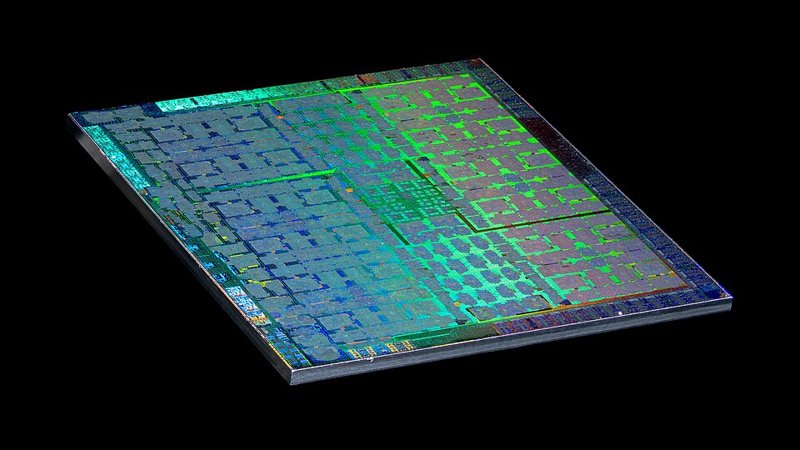
The Physics Revolution: How In-Memory Computing Changes Everything
Traditional digital processors—from smartphones to supercomputers—suffer from a fundamental architectural bottleneck known as the von Neumann barrier. Every computation requires moving data from memory to processing units, then moving results back to memory, creating an endless cycle of energy-consuming data transfers. For AI workloads involving massive matrix calculations, this data movement can consume dramatically more energy than the actual mathematical operations.
Analog AI accelerators eliminate this bottleneck through a revolutionary approach: computation happens directly within memory cells themselves, using the physical properties of materials to perform mathematical operations. Instead of storing weights as digital bits, analog systems use the electrical conductance of memory devices like Phase Change Memory (PCM) or Resistive RAM (RRAM) to represent neural network parameters as continuous values.
The numbers are impressive: IBM’s latest analog AI chip demonstrates speech recognition tasks consuming just femtojoules per operation—dramatically less energy than equivalent digital computations. Recent results published in Nature show IBM’s 64-tile analog chip achieving up to 12.4 tera-operations per second per watt (TOPS/W) chip-sustained performance, significantly outperforming even the most efficient digital AI accelerators. For consumers, this could mean smartphones that run advanced AI features for weeks between charges, or data centers that slash their electricity bills by orders of magnitude.
Think of it like the difference between using a calculator and using an abacus. Digital processors compute by moving beads (data) back and forth between storage and calculation areas thousands of times per second. Analog processors perform calculations by directly adjusting the beads’ positions, eliminating most of the movement entirely. The physics works elegantly: varying the conductance of a memory device from high to low resistance naturally multiplies electrical signals, performing the core operation in neural networks.
But here’s where the technology hits its first commercial barrier: while the physics works perfectly in controlled laboratory conditions, manufacturing billions of analog devices with consistent behavior proves extraordinarily challenging. Each memory cell must maintain precise conductance values across temperature variations, aging effects, and process variations—requirements that push current fabrication technology to its limits.
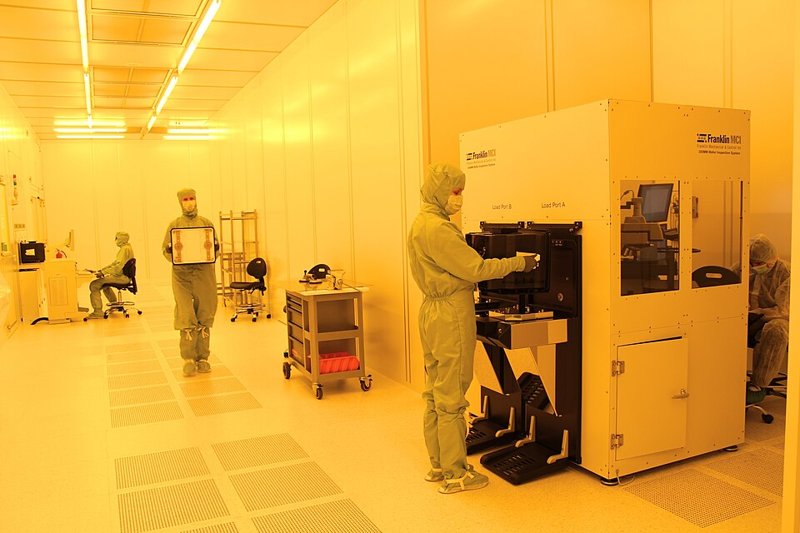
The Manufacturing Reality: Where Breakthrough Physics Meets Economic Constraints
Laboratory demonstrations of analog AI accelerators consistently show impressive performance metrics, but scaling from research prototypes to consumer products reveals daunting manufacturing challenges. The core issue isn’t that the technology doesn’t work—it’s that making it work reliably and economically at billion-device scales requires solving problems that don’t exist for digital processors.
Here’s why this matters for real products: Consider the fundamental difference in requirements between digital and analog devices. Digital memory cells need only to distinguish between two states (0 and 1), providing enormous tolerance for process variations and aging effects. A digital bit works perfectly whether the transistor has slightly more or less leakage current—as long as the signal clearly represents “on” or “off,” the computation remains accurate. It’s like having a light switch that works whether you flip it gently or forcefully—as long as the light turns on or off, the job is done.
Analog AI devices demand precision that’s orders of magnitude more stringent. Each memory cell must maintain its conductance value with high accuracy across its operational lifetime, while withstanding billions of read/write cycles and wide temperature variations. Manufacturing variations that are irrelevant for digital devices become critical failures for analog systems. Think of it like tuning a piano: digital devices only need to play notes, but analog devices must stay perfectly in tune through temperature changes, humidity, and constant use.
The economics present significant challenges: Current estimates suggest analog AI chips face substantial cost premiums compared to equivalent digital processors, primarily due to yield issues and additional testing requirements. While digital processor chips can achieve high yield rates after process optimization, analog devices often struggle with much lower yields in early production runs due to their stringent precision requirements.
Recent industry analysis reveals the scale of this challenge. IBM’s analog AI chips require specialized phase change memory fabrication processes that aren’t compatible with standard CMOS manufacturing lines. Building dedicated fabrication facilities for analog AI would require massive investments that can only be justified by production volumes that don’t yet exist.
The chicken-and-egg problem becomes clear: Without large-scale production, analog AI remains expensive and niche. Without cost-competitive devices, applications can’t justify analog AI over cheaper digital alternatives. This economic barrier explains why breakthrough technologies with clear technical superiority often remain in laboratories for decades.
Temperature stability presents another manufacturing hurdle. While digital processors can compensate for temperature variations through error correction and calibration circuits, analog devices must maintain their precision through inherent materials properties. Each conductance state must remain stable across operational temperature ranges—a requirement that eliminates many otherwise promising memory technologies.
Testing and calibration add further complexity: Every analog AI device requires individual calibration to account for manufacturing variations, adding significant cost and complexity to production processes. Digital chips can be tested with standardized patterns, but analog devices need custom calibration procedures for each application.
The Software Compatibility Challenge: Why Revolutionary Hardware Needs Revolutionary Tools
Even if manufacturing challenges were solved overnight, analog AI accelerators would face another formidable barrier: the entire software ecosystem for AI development assumes digital computation. Every machine learning framework, from TensorFlow to PyTorch, optimizes algorithms for digital processors that perform exact mathematical operations with perfect repeatability.
Analog AI systems introduce fundamental uncertainties that digital software isn’t designed to handle. In analog devices, computational noise, drift effects, and precision limitations mean that the same calculation performed twice may yield slightly different results. For digital engineers accustomed to bit-perfect accuracy, this represents a paradigm shift requiring completely different programming approaches.
The incompatibility runs deeper than programming convenience—it affects algorithmic design itself. Digital AI algorithms rely on precise weight updates during training, exact gradient calculations, and reproducible inference results. Analog systems introduce stochastic noise that can actually improve some AI algorithms through regularization effects, but exploiting these benefits requires developing entirely new training methodologies.
Current solutions involve hybrid approaches: training AI models on digital systems, then mapping the trained weights to analog hardware for inference. While this preserves software compatibility, it sacrifices many of analog AI’s potential advantages and adds complexity to the deployment pipeline.
The development tools simply don’t exist yet. Unlike digital AI accelerators that benefit from mature compiler toolchains and debugging environments, analog AI developers must create custom software stacks for each device architecture. This “reinvent the wheel” requirement dramatically slows development cycles and increases costs for any company attempting to deploy analog AI solutions.
Industry adoption becomes even more challenging when considering integration with existing systems. Modern AI applications assume they can precisely reproduce previous results, perform A/B testing with identical conditions, and debug failures through deterministic replay. Analog AI’s inherent variability, while potentially beneficial for algorithm performance, conflicts with standard software engineering practices.
This software barrier explains why even companies with working analog AI hardware struggle to find commercial applications. The technology may work beautifully for specific, carefully designed algorithms, but retrofitting existing AI applications requires massive software engineering investments that few companies can justify.
Market Reality vs. Laboratory Promise: Why 1000x Improvements Don’t Guarantee Success
The history of technology is littered with breakthrough innovations that achieved impressive laboratory performance but failed to reach commercial success. Analog AI accelerators risk joining this list not because the technology is flawed, but because the pathway from laboratory demonstration to mass-market deployment involves barriers that pure technical performance cannot overcome.
Consider the competitive landscape analog AI faces: Digital AI accelerators continue improving rapidly through established manufacturing processes, mature software tools, and massive investment from companies like NVIDIA, Google, and Intel. While analog AI promises 1000x energy efficiency, digital solutions deliver 10-50x improvements every few years through proven scaling methods.
The timeline mismatch becomes crucial. Analog AI researchers demonstrate impressive results with small-scale laboratory devices, but commercial deployment requires 5-10 years of manufacturing development, software ecosystem creation, and market education. During this development period, digital alternatives continue advancing, potentially closing the performance gap through conventional approaches.
Real applications add another layer of constraints. Most AI workloads in smartphones, data centers, and edge devices prioritize factors beyond energy efficiency: software compatibility, development speed, debugging capabilities, and predictable costs. Analog AI’s energy advantages may not overcome these practical deployment considerations for many applications.
The risk-averse nature of semiconductor industry adoption further complicates commercialization. Companies building AI products prefer proven technologies with established supply chains, mature development tools, and predictable roadmaps over revolutionary approaches that require custom engineering. Even with superior technical performance, analog AI faces the challenge of displacing entrenched digital solutions that “work well enough” for current applications.
Early commercial applications are likely to emerge in specialized niches where analog AI’s advantages significantly outweigh the deployment challenges: ultra-low-power edge devices, space applications with strict energy constraints, or specialized AI inference tasks where the benefits justify the additional complexity.
For mainstream consumer devices, the timeline remains uncertain. While industry experts suggest analog AI accelerators may find commercial success within this decade for specialized applications, widespread deployment in smartphones and laptops will likely require longer development periods to overcome the accumulated barriers.
The technology will succeed eventually—the physics are too compelling, and the energy efficiency advantages too significant to ignore permanently. But success will likely come through gradual integration and hybrid approaches rather than the rapid displacement of digital processors that breakthrough performance metrics might suggest.
References
[1] S. Ambrogio, P. Narayanan, A. Okazaki, et al., “An analog-AI chip for energy-efficient speech recognition and transcription,” Nature, 2023.
[2] J.-M. Hung, C.-X. Xue, H.-Y. Kao, et al., “A four-megabit compute-in-memory macro with eight-bit precision based on CMOS and resistive random-access memory for AI edge devices,” Nature Electronics, 2021.
[3] H. Jang, H. Hinton, W.-B. Jung, et al., “In-sensor optoelectronic computing using electrostatically doped silicon,” Nature Electronics, 2022.
[4] K.-U. Demasius, A. Kirschen, S. Parkin, “Energy-efficient memcapacitor devices for neuromorphic computing,” Nature Electronics, 2021.
[5] “The Femtojoule Promise of Analog AI,” IEEE Spectrum.
[6] “Phase change memory,” IBM Research Publications.
[7] “1,000X Faster With Almost No Power Draw, China’s New Analog Chip Just Crushed the World’s Best Processors,” Indian Defence Review, 2025.
[8] “An energy-efficient analog chip for AI inference,” IBM Research Blog, 2025.
This digest was generated by AaBot using real-time web and literature research.