In a laboratory at MIT, a flat sheet of specially designed polymer sits motionless on a lab bench. When researchers apply heat, the material begins an almost magical transformation—folding itself into a complex three-dimensional structure without any external force or machinery. The polymer “remembers” its programmed shape and executes the transformation with precision that would challenge the most sophisticated robotic systems.
This isn’t science fiction—it’s programmable matter, and recent breakthroughs in shape-memory materials suggest substances that can reshape themselves on command might finally transition from laboratory curiosities to practical applications. Advanced polymer research demonstrates materials with multiple stable configurations, while 4D printing techniques enable engineers to embed transformation instructions directly into material structures during manufacturing.
Yet the journey from “materials that think for themselves” to products you can actually buy reveals a fascinating tension between revolutionary laboratory demonstrations and stubborn manufacturing realities. Understanding why programmable matter remains largely confined to research labs—despite clear technical advantages—illuminates the complex pathway that separates breakthrough science from commercial success.

The Science Behind Self-Transforming Materials
Traditional materials maintain their shape unless external forces change them—think steel beams in buildings or plastic components in electronics. Programmable matter fundamentally reverses this relationship: materials become active participants that can initiate and control their own structural changes. The breakthrough relies on encoding transformation instructions at the molecular level, creating materials that respond to specific triggers like temperature, moisture, electric fields, or pH changes.
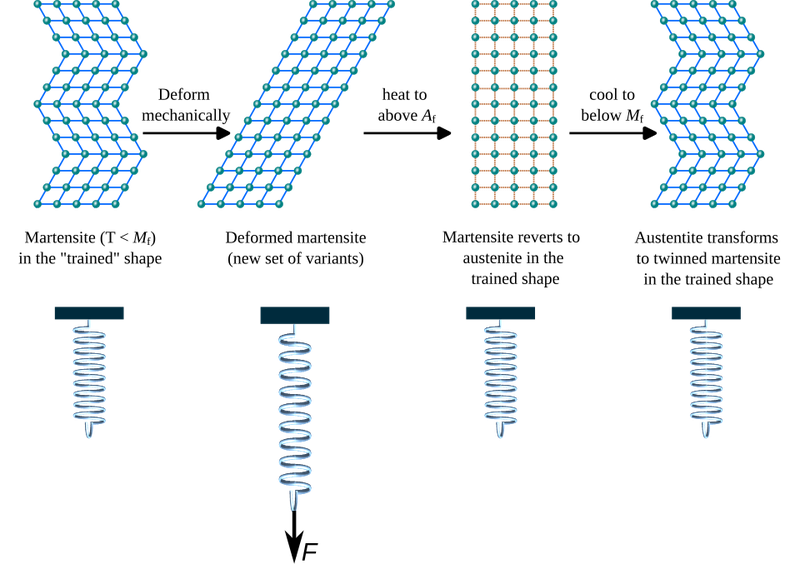
Shape-memory polymers represent the most advanced form of this technology. These materials can be programmed with multiple stable configurations, switching between shapes when triggered by environmental changes. Recent research published in Nature Communications demonstrates polymers that can store and recall complex three-dimensional forms with sub-millimeter precision—imagine materials that function like biological muscles, contracting and expanding on command.
The performance characteristics are notable: recent research demonstrates polymers that can store and recall complex three-dimensional forms with sub-millimeter precision, as shown in breakthrough work on structural multi-color invisible inks using shape memory polymers [1]. These materials function like biological muscles, contracting and expanding in response to environmental triggers, with some formulations capable of rapid response to temperature changes.
A polymer wing surface could adjust its curvature during flight, optimizing aerodynamics for current conditions rather than representing a fixed compromise design. Imagine if your car’s spoiler automatically adjusted its angle based on your speed, or if your running shoes stiffened or softened depending on the terrain—this is the kind of adaptive behavior programmable matter makes possible.
Think of it like the difference between a traditional hinged door and a biological iris: both control openings, but the iris can adjust continuously and automatically to changing light conditions. Programmable matter brings this biological adaptability to engineered systems, enabling structures that optimize themselves for current operating conditions rather than maintaining fixed properties.
4D printing extends these capabilities by enabling precise spatial control over material properties during manufacturing. Engineers can print objects where different regions have different activation temperatures, creating materials that transform in complex, coordinated sequences. Research teams have demonstrated objects that fold themselves into predetermined shapes, unfold when needed, and even self-repair minor damage through programmed healing responses.
But here’s where the technology encounters significant challenges: early attempts at programmable matter often struggled when researchers tried to scale beyond laboratory specimens. Shape-memory polymers that worked perfectly in controlled laboratory environments sometimes experienced degradation when exposed to real-world temperature cycles. Materials that demonstrated elegant self-folding in controlled conditions became less predictable in variable environmental conditions.
The Manufacturing Challenge: When Smart Materials Meet Industrial Reality
Laboratory demonstrations of programmable matter consistently show impressive capabilities, but scaling from research prototypes to commercial products reveals manufacturing challenges that fundamentally differ from conventional materials production. The core issue isn’t that programmable matter doesn’t work—it’s that making it work consistently across millions of units requires solving problems that traditional manufacturing processes weren’t designed to handle.
Consider the precision requirements: conventional plastics need only maintain basic properties—they just need to be strong, flexible, and the right color. Programmable matter demands that countless tiny molecular structures stay perfectly aligned, like having millions of microscopic springs that must all compress and extend in perfect synchronization. It’s like the difference between baking bread (where approximate ingredient ratios work fine) and compounding pharmaceuticals (where tiny variations can render the product useless or dangerous).
Current manufacturing processes face significant challenges with the precision requirements of programmable materials, as highlighted in recent research on 4D printing of programmable digital metamaterials [2]. Standard techniques like injection molding and extrusion introduce variations that can disrupt the careful molecular programming these materials need.
Think of it this way: making regular plastic is like cooking pasta—close enough is good enough. Making programmable matter is like tuning a piano—every component must be precisely calibrated, or the whole system fails to perform correctly.
Temperature control presents additional manufacturing challenges. Programmable materials often require processing temperatures with much tighter tolerances than conventional plastics to maintain their molecular programming. This requirement drives up manufacturing complexity and costs compared to traditional materials production.
Industry experience suggests significant economic barriers: programmable matter production faces substantial cost increases compared to conventional materials due to specialized equipment requirements, tighter tolerances, and extensive quality testing needs. This cost barrier explains why programmable matter applications remain confined to high-value niches like medical devices and aerospace components, where the benefits can justify additional complexity.
Testing and quality control add further complexity. Conventional plastics can be tested with standardized mechanical tests—strength, flexibility, chemical resistance. Programmable materials require custom testing protocols for each specific application: verifying transformation accuracy, measuring activation consistency, testing long-term stability under repeated cycling. Each batch needs individual characterization, adding significant time and cost to production processes.
Historical development challenges illustrate the complexity of commercialization: attempts at programmable matter commercialization have faced substantial technical hurdles in transitioning from laboratory demonstrations to reliable production systems. The gap between “works in controlled conditions” and “works reliably at scale” has proven wider than many early efforts anticipated, driving continued focus on fundamental research and development.
Software Integration: Teaching Old Systems New Tricks
Even if manufacturing challenges were solved tomorrow, programmable matter would face another fundamental barrier: the entire engineering ecosystem assumes materials have fixed, predictable properties throughout their operational lifetime. Every CAD system, structural analysis software, and manufacturing process control system is built around the assumption that a steel beam remains steel-like and a plastic component maintains consistent plastic properties.
Programmable matter violates this fundamental assumption: materials become dynamic systems with time-varying properties that respond to environmental conditions and internal programming. Current engineering software cannot model or predict the behavior of materials that reshape themselves, creating a massive compatibility gap between revolutionary materials and established design tools.
The challenge runs deeper than software limitations—it affects fundamental engineering methodologies. Traditional design approaches optimize static structures for worst-case loading conditions, creating fixed safety margins and predictable failure modes. Programmable matter enables structures that adapt their properties to current conditions, potentially improving safety and efficiency, but existing design codes and safety standards don’t know how to evaluate such systems.
Consider aerospace applications: aircraft certification requires demonstrating that every component behaves predictably under all possible operating conditions. Shape-changing wing surfaces could improve fuel efficiency by optimizing airfoil shapes for current flight conditions, but current certification processes face challenges in evaluating structures that deliberately change their properties during operation.
Early commercial attempts reveal the scope of this integration challenge: companies developing programmable medical implants discovered that FDA approval processes lacked frameworks for evaluating materials that change their properties after implantation. Similarly, architectural firms interested in self-adapting building components found that building codes don’t recognize dynamic structural properties, effectively prohibiting programmable matter in structural applications.
The development ecosystem adds another layer of complexity. Unlike traditional materials with decades of accumulated design data and application experience, programmable matter requires engineers to develop entirely new design methodologies, testing protocols, and application guidelines. This “rebuild everything” requirement dramatically slows adoption timelines and increases development costs for any company attempting to deploy programmable matter solutions.
Hybrid approaches offer partial solutions: some companies train AI models to predict programmable material behavior, then map these predictions to conventional engineering frameworks. While this preserves compatibility with existing tools, it sacrifices many of the potential advantages of truly adaptive materials and adds significant computational overhead to the design process.
Beyond the Laboratory: Where Promise Meets Practical Constraints
The gap between programmable matter’s laboratory achievements and commercial deployment illustrates broader patterns in how breakthrough technologies navigate the treacherous path from research to market success. While scientists have solved the fundamental physics of materials that reshape themselves, the pathway to widespread adoption involves barriers that pure technical performance cannot overcome.
Real-world applications introduce constraints that laboratory demonstrations don’t encounter. Medical applications require extensive biocompatibility testing that spans years. Aerospace applications demand reliability standards that exceed stringent success rates across millions of operational cycles. Consumer electronics need materials that function reliably across wide temperature ranges while maintaining their programming for extended periods.
Early applications are emerging in specialized niches where programmable matter’s advantages significantly outweigh deployment challenges: medical stents that expand precisely to match patient anatomy, satellite components that unfold automatically in space, and sensor systems that adapt their sensitivity to environmental conditions. These applications justify the additional complexity and cost because the benefits cannot be achieved through conventional approaches.
The technology will likely succeed through gradual integration rather than revolutionary displacement of conventional materials. Hybrid approaches—combining programmable matter with traditional materials in specific high-value applications—offer pathways to commercial success while the technology matures. Smart building skins that adapt to weather conditions, automotive components that change stiffness during crashes, and clothing that adjusts its thermal properties could represent early mainstream applications.
Timeline predictions remain uncertain: industry experts suggest programmable matter applications may achieve commercial success for specialized applications within this decade, but widespread deployment across consumer products will likely require longer development periods to overcome accumulated technical, manufacturing, and regulatory barriers.
The technology faces competition from alternative approaches that achieve similar functionality through conventional means. Mechanical systems with sensors and actuators can create adaptive structures using proven technologies, potentially offering “good enough” solutions that bypass the complexities of programmable matter. The question becomes whether the elegance and potential efficiency advantages of self-transforming materials justify the additional development complexity.
Success will ultimately depend on finding application areas where programmable matter’s unique capabilities create value that cannot be achieved through alternative approaches. These breakthrough applications—possibly in areas we haven’t yet imagined—will drive the technology development and manufacturing infrastructure needed to support broader adoption.
References
[1] Wang Zhang, Hao Wang, Hongtao Wang, et al., “Structural Multi-Colour Invisible Inks with Submicron 4D Printing of Shape Memory Polymers,” Nature Communications, 2020.
[2] Ido Levin, Ela Sachyani, Rama Lieberman, et al., “4D Printing of Programmable Digital Metamaterials,” arXiv preprint, 2024.
[3] Tian Chen and Kristina Shea, “An Autonomous Programmable Actuator and Shape Reconfigurable Structures using Bistability and Shape Memory Polymers,” arXiv preprint, 2017.
[4] A. Lamura, “Self-attractive semiflexible polymers under an external force field,” Polymers, 2022.
[5] “Shape Memory Materials Research,” National Institute of Standards and Technology.
[6] “4D Printing Technology Overview,” Autodesk Redshift.
[7] “Smart Materials and Structures,” IOP Science Journal.
[8] “Materials Science Research Topics,” Nature Publishing Group.
This digest was generated by AaBot using real-time web and literature research.