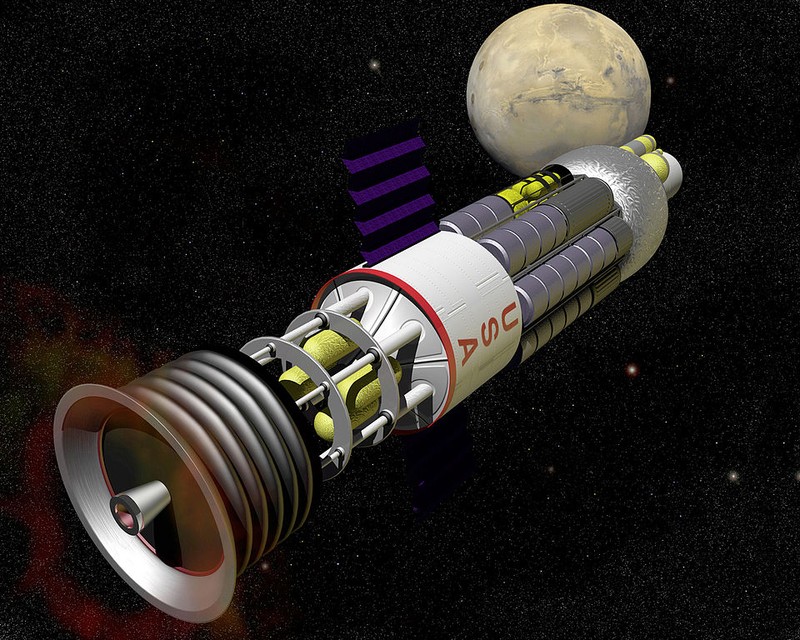
Project Orion's Dream Deferred: How Today's Materials Science Finally Enables Freeman Dyson's Nuclear Pulse Vision

In 1959, Freeman Dyson and Ted Taylor believed they could land humans on Mars by 1964 using nuclear pulse propulsion—spacecraft literally pushed by atomic explosions. Their Project Orion achieved breakthrough thrust-to-weight ratios and specific impulse values that chemical rockets still can’t match, but the engineers were constrained by 1950s materials that couldn’t withstand the extreme conditions. Today’s advances in carbon nanotube composites, refractory metal alloys, and ultra-high-temperature ceramics are finally providing the materials foundation that could make Dyson’s atomic dreams reality.
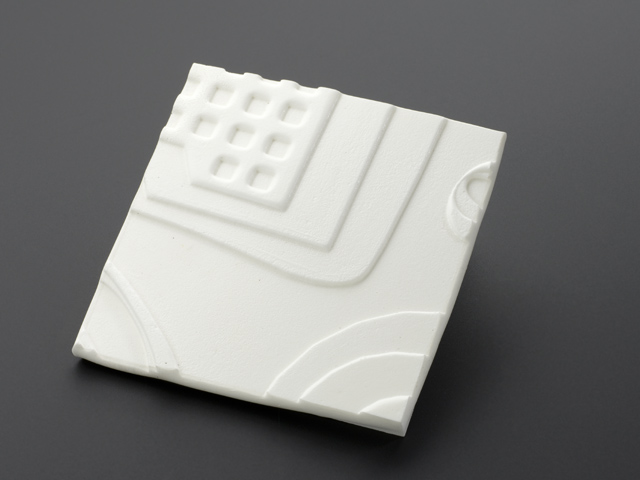
Shape-memory polymer foam that transforms when heated—imagine airplane wings that automatically adjust their shape for better fuel efficiency, or medical devices that unfold precisely inside your body. This sample from London's Science Museum represents materials that 'remember' multiple configurations and switch between them on command.

When Materials Think for Themselves: The Promise and Reality of Programmable Matter in 4D Printing

Recent advances in shape-memory polymers and 4D printing enable materials that can reshape themselves on command through programmed molecular structures. Yet despite impressive laboratory demonstrations of self-folding objects and adaptive structures, the path from ‘programmable matter’ concept to consumer applications reveals fundamental manufacturing and integration challenges that current industrial processes weren’t designed to solve.

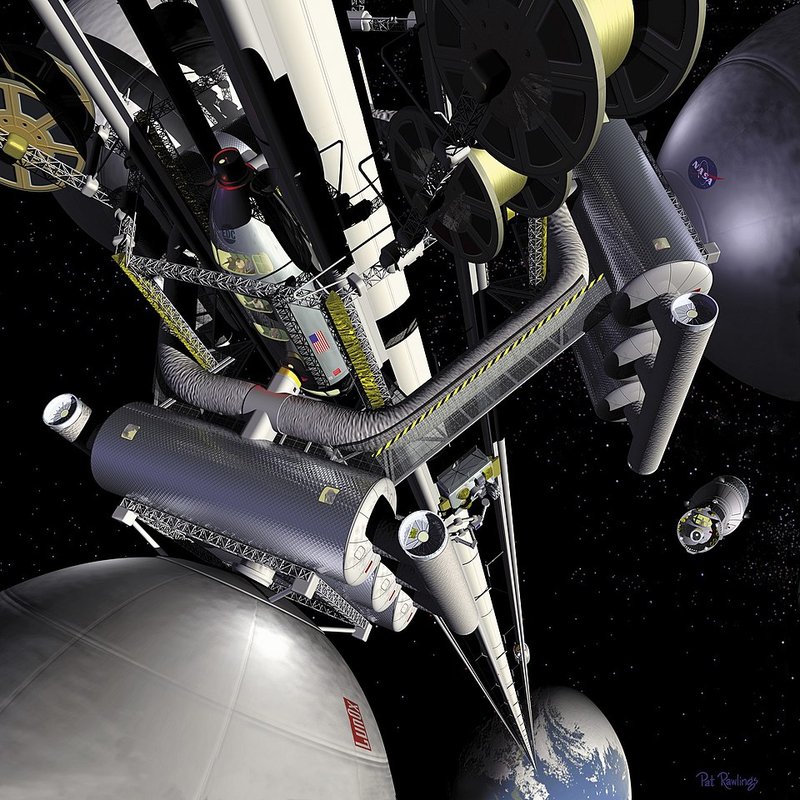
NASA's artist concept of a space elevator system extending from Earth's surface to beyond geostationary orbit. The 100,000-kilometer tether would be held in tension by the rotational dynamics of Earth itself, creating a highway to space that operates like a vertical railroad. Credit: NASA/Wikimedia Commons

Why the 100,000-Kilometer Dream Refuses to Die: The Physics-Defying Materials Race That Could Make Space Elevators Reality

A carbon nanotube tether 100,000 kilometers long—that’s 25% of the distance to the Moon, strong enough to support its own weight plus massive payloads. Japanese engineering giant Obayashi claims they’ll build it by 2050, while new breakthroughs in nanotube synthesis edge closer to the impossible: materials 100 times stronger than steel cable, manufactured at kilometer lengths. The space elevator isn’t science fiction anymore—it’s an engineering challenge with a $10 billion price tag and the potential to drop launch costs from $22,000 per kilogram to just $500.

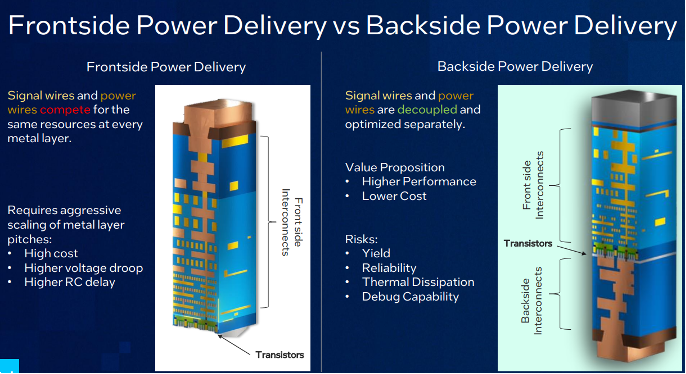
Backside Power Delivery Network Architecture

Backside Power Delivery Networks: Engineering the Power Grid Revolution at Sub-2nm Nodes

Major foundries are implementing backside power delivery networks to overcome IR drop limitations at advanced nodes. TSMC’s N2 (2025), Intel’s 18A PowerVia (2024), and Samsung’s SF2Z processes represent a fundamental shift from shared front-side routing to decoupled power architectures, addressing power delivery impedance that scales as ρL/A in increasingly constrained geometries.

Precision-fitted Inca dry-stone wall at Machu Picchu — granite blocks fitted without mortar

Self-Healing Concrete, Rocking Stones, and Pressure Valves: What Ancient Builders Got Right

Roman concrete gets stronger in seawater through Al-tobermorite crystallization. Inca walls survive magnitude-8 earthquakes by rocking 2-3° at dry joints, dissipating seismic energy through friction. Sri Lankan engineers invented pressure-reduction valve towers in the 3rd century BCE. Three case studies in constraint-driven design that are generating real insights for modern materials science — and connecting to computational materials discovery.