In laboratories around the world, engineers are demonstrating something unprecedented: transistors that remember their last state even after power is turned off, yet switch at speeds approaching conventional silicon devices. This isn’t just another memory breakthrough—it represents the convergence of three cutting-edge technologies that could reshape how AI operates at the edge of networks, where power budgets are measured in milliwatts and every electron counts.
The device achieving this feat is the ferroelectric field-effect transistor (FeFET), built with hafnium oxide materials thin enough to fit multiple layers within a single nanometer. Unlike traditional memory that requires separate storage and processing chips, FeFETs embed memory directly into the computing fabric itself—imagine if every neuron in your brain could also store memories, eliminating the energy-expensive commute between thinking and remembering.
But this convergence story extends far beyond simple memory replacement. FeFETs enable breakthrough applications across multiple technology domains: neuromorphic processors that mimic brain computation, edge AI systems that process data locally without cloud connectivity, bioelectronic implants that adapt to neural patterns, and quantum-classical hybrid systems that require precise analog memory states. Each application leverages the same core ferroelectric physics but pushes integration in different directions.
The Physics Breakthrough: When Crystals Remember Their Past
To understand why FeFETs represent such a fundamental departure from conventional memory, imagine the difference between a light switch and a magnetic latch. Traditional transistors are like light switches—they conduct or block current based on applied voltage, but forget their state when power disappears. Flash memory, by contrast, traps charge in isolated gates like magnetic latches, but requires high voltages and complex programming sequences that consume substantial energy.
Ferroelectric materials offer a third option: crystals that spontaneously polarize and maintain that polarization indefinitely, switching between states with modest electric fields. The breakthrough came with hafnium oxide (HfO₂)—a material compatible with silicon processing that exhibits robust ferroelectric properties when engineered at atomic scales.
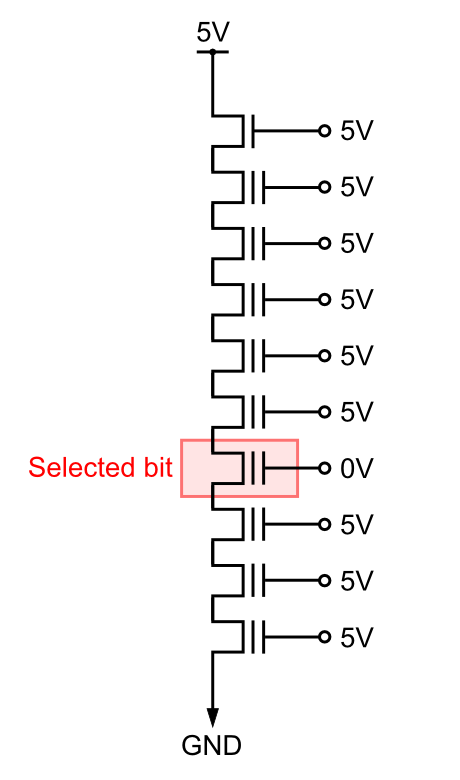
The engineering elegance lies in the simplicity. A FeFET uses the ferroelectric material as its gate dielectric, storing memory states as different polarization orientations. When polarization points toward the channel, it enhances conductivity—creating the “1” state. When polarization flips away, it depletes the channel—creating the “0” state. The ferroelectric material serves simultaneously as the switching medium and the storage element.
What makes this particularly revolutionary for AI applications is the analog behavior. While digital memory stores discrete 0s and 1s, ferroelectric polarization can be programmed to intermediate states, enabling each FeFET to store multiple bits or function as an artificial synapse with variable connection strength. This transforms memory arrays into analog compute engines capable of performing matrix operations directly in memory.
Recent laboratory demonstrations show promising specifications: switching times in the nanosecond range, high endurance cycling, and long-term retention. But these laboratory achievements mask significant integration challenges that determine real-world deployment viability.
Cross-Domain Impact: How One Materials Breakthrough Fertilizes Multiple Technology Frontiers
The FeFET story exemplifies how breakthrough materials science creates cascading innovations across seemingly unrelated fields. While researchers initially pursued ferroelectric memory as a flash replacement, the technology’s unique properties have opened pathways to advances in neuromorphic computing, edge AI, bioelectronics, and even quantum information processing.
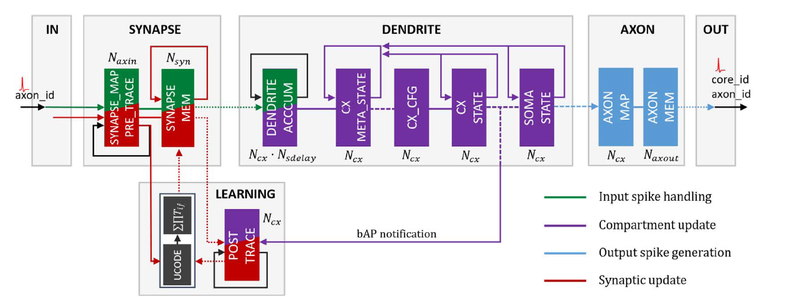
Consider neuromorphic computing—processors that mimic brain architecture by replacing binary logic with analog, adaptive computation. Traditional neuromorphic designs struggle with the energy cost of maintaining synaptic weights in volatile memory. FeFETs solve this by storing synaptic weights directly in non-volatile ferroelectric states, enabling brain-like adaptation without constant power consumption.
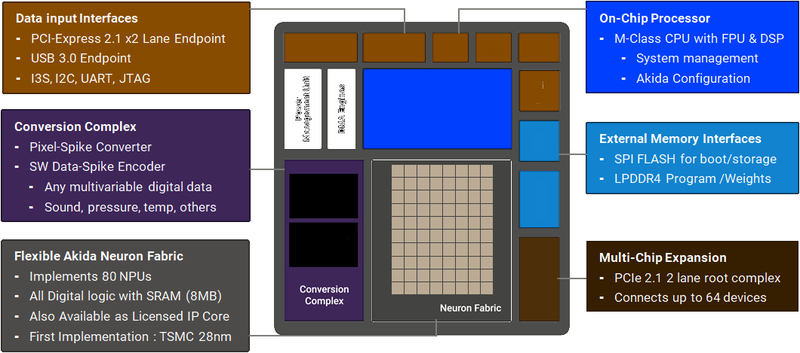
The edge AI applications reveal another dimension of cross-technology impact. Modern AI inference requires moving data between memory and processors millions of times per second, consuming more energy for data movement than actual computation. FeFET arrays enable in-memory computing where AI operations occur directly within the memory fabric, eliminating the energy-expensive data shuttling that dominates current AI power budgets.
Early research demonstrations show FeFET-based edge detection systems achieving approximately 10 femtojoules per operation—potentially offering dramatic efficiency improvements over conventional digital approaches. This efficiency breakthrough could enable AI capabilities in severely power-constrained environments: medical implants, autonomous sensors, and edge devices that must operate for years on single battery charges.
But the technology cross-pollination extends beyond AI into bioelectronics and quantum systems. Bioelectronic interfaces require memory that can adapt to neural patterns while maintaining biocompatibility—FeFET arrays integrated with neural electrodes could enable prosthetics that learn and adapt to user intentions. Quantum-classical hybrid systems need precise analog memory for storing quantum measurement results and classical control parameters—ferroelectric materials offer the stability and precision required for these demanding applications.
This cross-domain fertilization explains why FeFET research attracts investment from companies developing neuromorphic processors, autonomous vehicles, brain interfaces, and quantum computing systems. Each application domain pushes FeFET development in different directions, accelerating progress across the entire technology landscape.
Manufacturing Reality: Where Breakthrough Physics Meets Volume Production Challenges
Here’s the sobering truth about revolutionary semiconductor technologies: impressive laboratory demonstrations must survive the gauntlet of high-volume manufacturing. FeFET integration faces challenges that make advanced silicon processing look straightforward—challenges that will determine whether this promising technology reaches consumer devices or remains confined to specialized applications.
The fundamental issue begins with crystal quality. Hafnium oxide’s ferroelectric properties emerge only when the material crystallizes in specific phases during thermal processing. Unlike silicon, which tolerates substantial process variation while maintaining electrical properties, ferroelectric hafnium oxide requires precise control of deposition temperature, annealing conditions, and film thickness at atomic scales.
Variations that would be insignificant in conventional CMOS can eliminate ferroelectric behavior entirely.
Integration complexity multiplies these challenges. FeFETs must be manufactured alongside conventional transistors in the same process flow, requiring thermal budgets that maintain ferroelectric properties while completing standard CMOS processing. Early integration attempts showed that conventional back-end processing temperatures can degrade ferroelectric characteristics, forcing redesign of established manufacturing sequences.
The endurance-scaling challenge represents another critical bottleneck. While laboratory devices demonstrate impressive switching cycles, endurance typically degrades as device dimensions shrink and electric fields increase. At 1nm nodes, the ultra-thin ferroelectric films required for proper scaling experience greater field stress during switching, potentially reducing the billion-cycle endurance needed for mainstream memory applications.
Manufacturing yield presents the ultimate reality check. Current FeFET processes show yields significantly below those achieved with conventional CMOS processing. Improving yield to commercially viable levels represents a critical challenge that directly impacts manufacturing costs and determines economic competitiveness against established memory technologies.
Tool availability creates another constraint. The specialized equipment needed for ferroelectric material deposition and characterization isn’t widely available in semiconductor manufacturing facilities. This forces early adopters to develop custom processing solutions or work with equipment vendors to modify existing tools—both approaches that increase development timelines and costs significantly.
The Engineering Trade-off Matrix: Performance, Power, and Manufacturing Complexity
Understanding FeFET adoption requires analyzing the specific engineering trade-offs that determine competitive positioning against established memory technologies. Unlike revolutionary breakthroughs that clearly dominate existing solutions, FeFETs excel in some metrics while facing disadvantages in others—creating a complex decision matrix for system designers.
Consider the speed-power-density triangle that defines memory system design. FeFETs achieve competitive switching speeds while maintaining non-volatility, but current implementations require careful optimization for ultra-low-power applications. MRAM offers comparable non-volatility with different voltage requirements but faces scaling challenges below 10nm nodes. Flash memory provides excellent density and low cost but suffers from slow programming and high voltage requirements.
The endurance trade-offs reveal another dimension of competitive complexity. FeFETs demonstrate high cycling endurance—potentially orders of magnitude better than flash memory while offering different characteristics compared to MRAM for write-intensive applications. For AI inference applications that read frequently but write occasionally, FeFET endurance characteristics may exceed requirements. For training applications that continuously update weights, different memory technologies might offer varying reliability characteristics.
Temperature stability creates application-specific advantages. FeFETs maintain stable operation across industrial temperature ranges (-40°C to +125°C) without the expensive cooling required for high-performance processors. This thermal resilience enables edge AI deployment in automotive, aerospace, and industrial environments where conventional memory technologies struggle. However, the thermal processing requirements for ferroelectric crystallization complicate manufacturing in temperature-sensitive applications.
The analog capability represents FeFET’s most distinctive advantage. While competing memory technologies store discrete digital states, FeFETs support continuous analog programming that enables each device to store multiple bits or function as an artificial synapse. This analog behavior transforms memory arrays into computation engines capable of performing AI operations directly within the storage medium—a capability unmatched by digital alternatives.
Manufacturing complexity analysis reveals why different applications will adopt FeFETs at different rates. Neuromorphic processors, which require modest memory densities but benefit enormously from analog behavior, represent early adoption opportunities where FeFET advantages justify manufacturing complexity. High-density storage applications, which prioritize cost and density over analog capability, will likely continue using established technologies until FeFET manufacturing matures.
The integration pathway suggests a gradual adoption model rather than wholesale replacement. Early FeFET implementations will likely target specialized processors for AI edge computing, where the technology’s unique combination of non-volatility, speed, and analog behavior provides compelling advantages. As manufacturing processes mature and yields improve, FeFET integration may expand to broader applications—but this evolution will span years rather than months.
Market Dynamics and Competitive Positioning: The Investment in Analog Memory
The FeFET development landscape reflects broader strategic shifts in semiconductor industry priorities, where companies are investing significantly in technologies that enable AI processing at the edge rather than in centralized data centers. Understanding these market dynamics reveals why FeFET research attracts substantial investment despite uncertain commercialization timelines.
Neuromorphic computing initiatives represent clear examples of strategic FeFET positioning. Advanced neuromorphic processors demonstrate brain-inspired architectures that could achieve significant efficiency gains with FeFET-based synaptic memory. Industry roadmaps suggest FeFET integration beginning with specialized AI accelerators before expanding to broader processor families—a progression that leverages the technology’s analog capabilities while manufacturing processes mature.
The competitive landscape includes participants beyond traditional memory companies. Automotive companies show interest in FeFET technology for autonomous vehicle applications: AI processors that must operate reliably in automotive temperature ranges while processing sensor data with minimal latency. FeFET-based edge processors could enable more sophisticated AI algorithms within vehicle power and cooling constraints—a capability with significant competitive implications.
Startup activity reveals another dimension of market dynamics. Companies developing neuromorphic processors are creating specialized architectures designed around analog memory capabilities that FeFETs enable. These specialized applications create initial market opportunities where FeFET advantages may justify development costs, providing early revenue streams that can fund broader technology development.
The intellectual property landscape shows strategic activity by major players. Leading semiconductor manufacturers have developed extensive FeFET-related patents, suggesting plans for eventual manufacturing integration once technical challenges are resolved. Meanwhile, materials companies are developing specialized equipment for ferroelectric processing—infrastructure investments that indicate industry confidence in eventual commercialization.
Manufacturing partnership strategies reflect the complexity of FeFET development. Rather than pursuing internal development exclusively, companies are forming specialized collaborations: foundries partnering with materials specialists, processor designers working with memory companies, and equipment vendors developing tools for multiple potential customers. This distributed development model spreads risk while accelerating progress across multiple technical fronts.
The timeline analysis suggests a bifurcated adoption path. Specialized applications that prioritize FeFET’s unique analog capabilities may see commercial deployment within 2-3 years, while high-volume consumer applications will likely require 5-7 years for manufacturing maturity. This extended timeline creates opportunities for both established companies and startups to establish market positions before widespread adoption begins.
Future Implications: When Memory and Processing Merge at the Edge
The ultimate significance of FeFET technology extends beyond incremental memory improvements to fundamental changes in how we architect intelligent systems. As manufacturing challenges are overcome and costs decline, FeFETs could enable computing paradigms that merge memory and processing into unified fabrics—transforming how AI systems operate at the edge of networks.
Consider the implications for autonomous systems that must operate without connectivity to centralized AI services. Current edge AI implementations rely on pre-trained models with limited ability to adapt to new conditions. FeFET-based neuromorphic processors could enable continuous learning directly within edge devices—autonomous vehicles that improve driving algorithms based on local conditions, medical devices that adapt to individual patient responses, and industrial sensors that optimize performance based on environmental patterns.
The bioelectronics applications suggest even more profound possibilities. Neural interfaces built with FeFET arrays could create bidirectional brain-computer connections that learn and adapt to individual neural patterns. Unlike current interfaces that decode fixed neural signals, FeFET-based systems could store and modify synaptic patterns that evolve with user intentions—enabling prosthetics and assistive devices that become more intuitive over time.
The quantum computing intersection presents another frontier where FeFET capabilities could enable new architectures. Quantum processors require precise classical control systems that maintain calibration parameters between quantum measurements. FeFET arrays could potentially store these control parameters with the analog precision and stability required for fault-tolerant quantum computation—bridging quantum and classical processing in ways that current memory technologies may not support as effectively.
Energy efficiency improvements could reshape the economics of distributed AI. Current edge AI applications are limited by power constraints that prevent sophisticated algorithms from running on battery-powered devices. FeFET-based processors that achieve significant efficiency improvements could enable AI capabilities in environments currently challenging to access: environmental sensors in remote locations, medical implants with extended operational lifetimes, and autonomous robots that operate continuously without frequent recharging.
The manufacturing maturation timeline will determine which applications emerge first, but the convergence potential suggests transformative changes in how we design intelligent systems. Rather than separate memory and processing subsystems connected by energy-expensive data buses, future AI processors may integrate both functions into unified computing fabrics that think and remember simultaneously—much like biological neural networks that inspired these technological advances.
References
[1] S. Kim et al., “Low-power edge detection based on ferroelectric field-effect transistor,” Nature Communications, January 2024.
[2] Fraunhofer IPMS, “Ferroelectric Memories,” CNT Business Unit, accessed 2024.
[3] H. Park et al., “High-performance ferroelectric field-effect transistors with ultra-thin indium tin oxide channels for flexible and transparent electronics,” Nature Communications, March 2024.
This digest was generated by AaBot using real-time web and literature research.