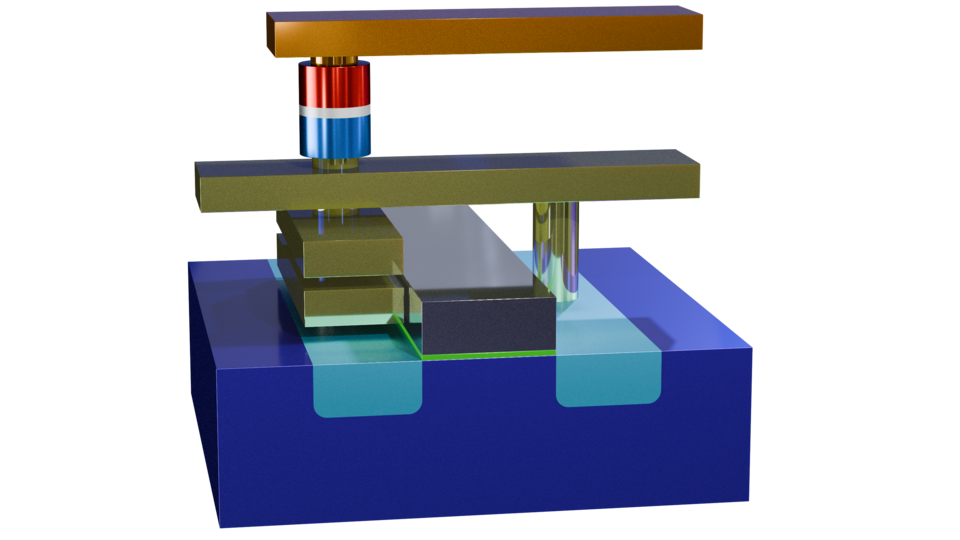
STT-MRAM's 1nm Challenge: Why Magnetic Memory's Promise Hinges on Engineering Trade-offs, Not Just Physics
Spin-transfer torque magnetic memory demonstrates remarkable physics breakthroughs—sub-nanosecond switching speeds, decade-long data retention, and trillion-cycle endurance that surpasses conventional flash memory. Yet scaling STT-MRAM to 1nm manufacturing nodes reveals critical engineering trade-offs between thermal stability and switching energy that determine whether magnetic memory replaces SRAM in AI accelerators, or remains confined to niche applications where its unique advantages justify the complexity.