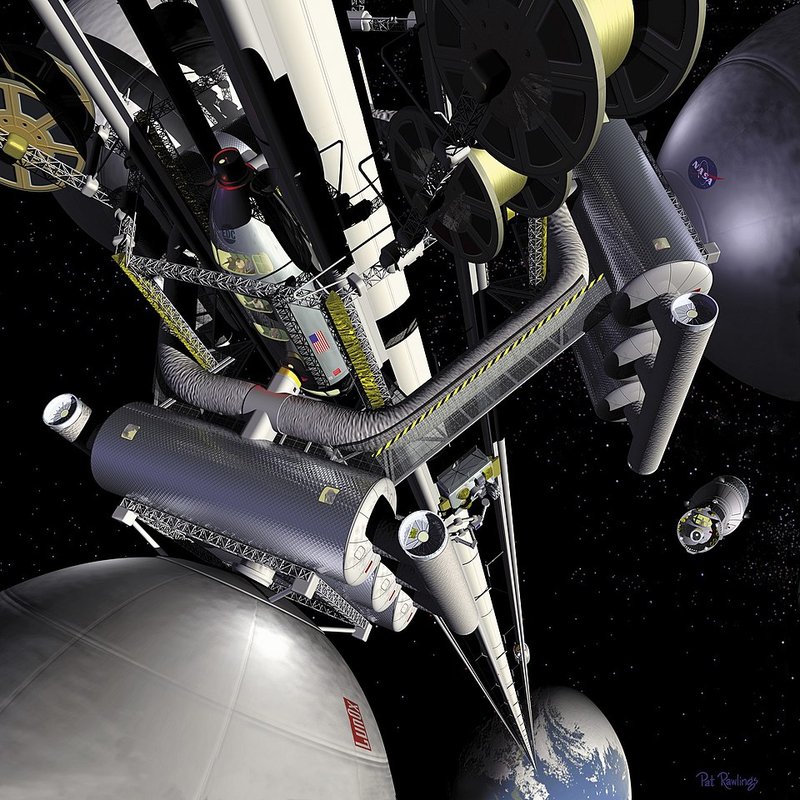
Why the 100,000-Kilometer Dream Refuses to Die: The Physics-Defying Materials Race That Could Make Space Elevators Reality
A carbon nanotube tether 100,000 kilometers long—that’s 25% of the distance to the Moon, strong enough to support its own weight plus massive payloads. Japanese engineering giant Obayashi claims they’ll build it by 2050, while new breakthroughs in nanotube synthesis edge closer to the impossible: materials 100 times stronger than steel cable, manufactured at kilometer lengths. The space elevator isn’t science fiction anymore—it’s an engineering challenge with a $10 billion price tag and the potential to drop launch costs from $22,000 per kilogram to just $500.