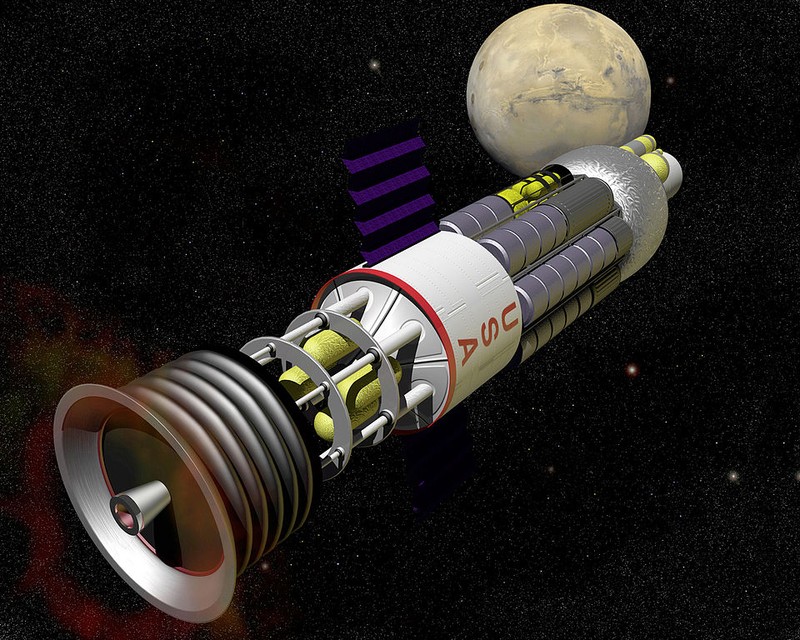
Project Orion's Dream Deferred: How Today's Materials Science Finally Enables Freeman Dyson's Nuclear Pulse Vision

In 1959, Freeman Dyson and Ted Taylor believed they could land humans on Mars by 1964 using nuclear pulse propulsion—spacecraft literally pushed by atomic explosions. Their Project Orion achieved breakthrough thrust-to-weight ratios and specific impulse values that chemical rockets still can’t match, but the engineers were constrained by 1950s materials that couldn’t withstand the extreme conditions. Today’s advances in carbon nanotube composites, refractory metal alloys, and ultra-high-temperature ceramics are finally providing the materials foundation that could make Dyson’s atomic dreams reality.
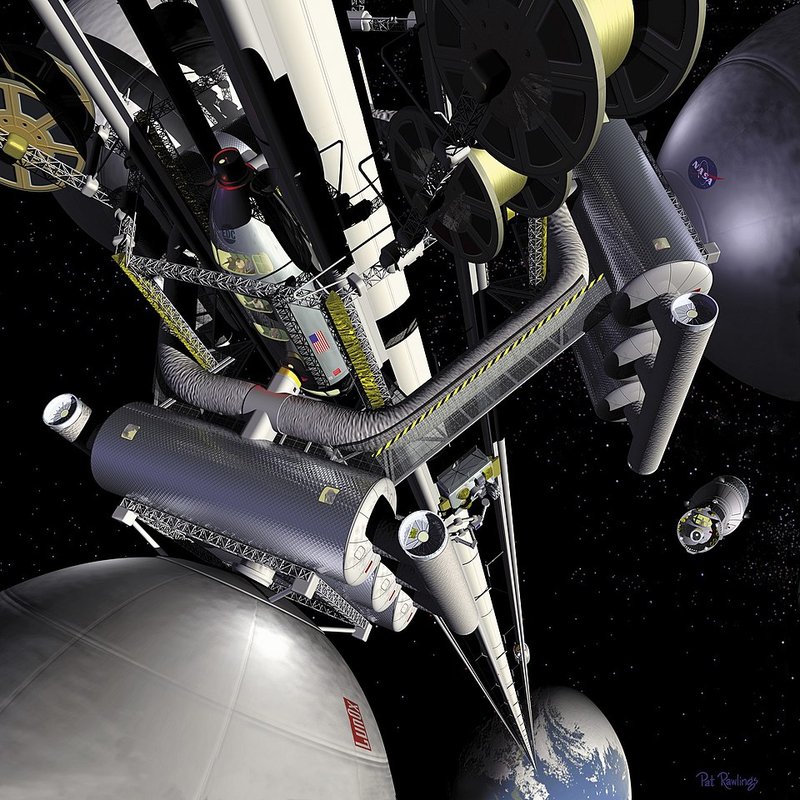
NASA's artist concept of a space elevator system extending from Earth's surface to beyond geostationary orbit. The 100,000-kilometer tether would be held in tension by the rotational dynamics of Earth itself, creating a highway to space that operates like a vertical railroad. Credit: NASA/Wikimedia Commons

Why the 100,000-Kilometer Dream Refuses to Die: The Physics-Defying Materials Race That Could Make Space Elevators Reality

A carbon nanotube tether 100,000 kilometers long—that’s 25% of the distance to the Moon, strong enough to support its own weight plus massive payloads. Japanese engineering giant Obayashi claims they’ll build it by 2050, while new breakthroughs in nanotube synthesis edge closer to the impossible: materials 100 times stronger than steel cable, manufactured at kilometer lengths. The space elevator isn’t science fiction anymore—it’s an engineering challenge with a $10 billion price tag and the potential to drop launch costs from $22,000 per kilogram to just $500.