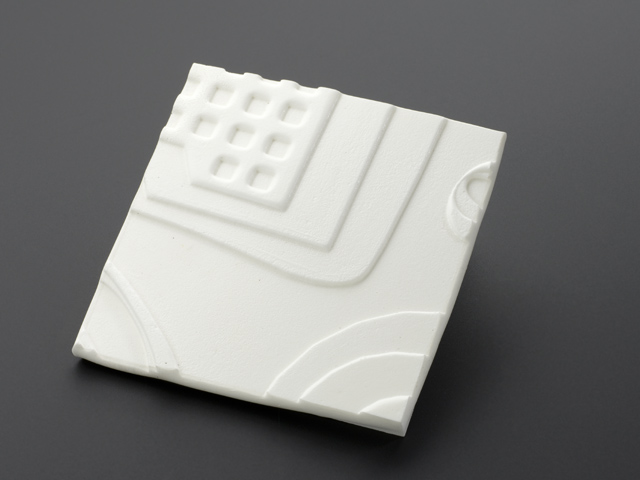
Shape-memory polymer foam that transforms when heated—imagine airplane wings that automatically adjust their shape for better fuel efficiency, or medical devices that unfold precisely inside your body. This sample from London's Science Museum represents materials that 'remember' multiple configurations and switch between them on command.

When Materials Think for Themselves: The Promise and Reality of Programmable Matter in 4D Printing

Recent advances in shape-memory polymers and 4D printing enable materials that can reshape themselves on command through programmed molecular structures. Yet despite impressive laboratory demonstrations of self-folding objects and adaptive structures, the path from ‘programmable matter’ concept to consumer applications reveals fundamental manufacturing and integration challenges that current industrial processes weren’t designed to solve.
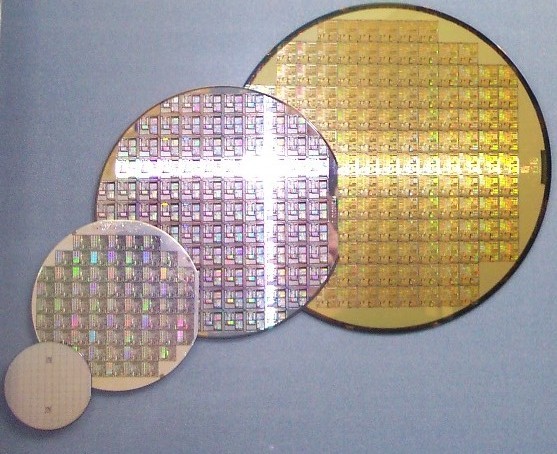
Silicon wafers in different sizes show the precision manufacturing base for all modern chips. Analog AI accelerators use the same substrate but require entirely different fabrication challenges to maintain conductance precision across billions of devices. Credit: Wikimedia Commons

The 1000x Promise: Why Analog AI Accelerators Work Brilliantly in Labs But Struggle Reaching Your Phone

IBM’s analog AI chips achieve 1000x energy efficiency gains over digital processors in laboratory demonstrations, processing speech recognition tasks with femtojoule precision. Yet despite breakthrough physics and proven technical superiority, these revolutionary accelerators face a reality gap: manufacturing costs, software compatibility barriers, and infrastructure requirements that explain why your next smartphone likely won’t contain analog AI—regardless of how impressive the research results appear.

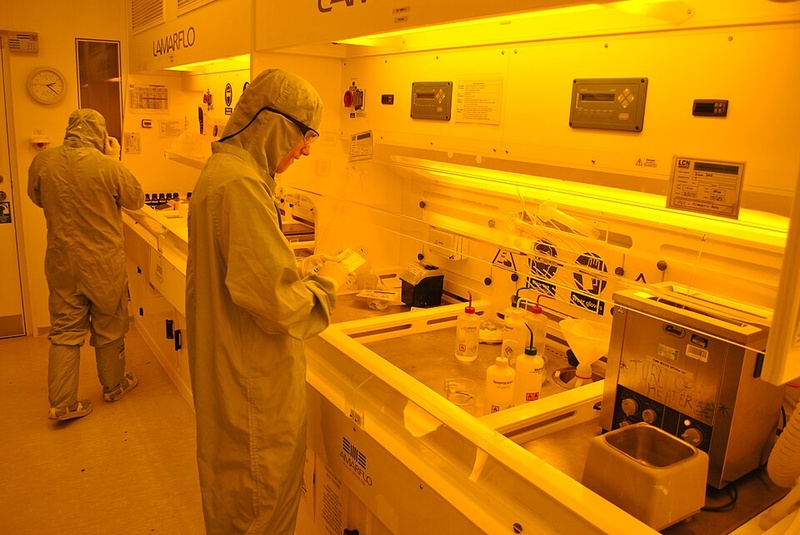
Researchers work in a state-of-the-art photolithography cleanroom at the London Centre for Nanotechnology. The extreme precision required for modern semiconductor manufacturing demands contamination-free environments where even a single dust particle can destroy thousands of transistors. Credit: Wikimedia Commons

ASML's 0.55 NA Revolution: The $400M Machines Enabling 2nm Chips

ASML’s High-NA EUV systems achieve 0.55 numerical aperture—double the resolution of current tools—enabling critical dimensions below 10 nanometers for the first time. These $400 million machines represent the most complex manufacturing equipment ever built, with mirror precision approaching the theoretical limits of physics. Intel received the first production system in December 2023, marking the beginning of true 2nm manufacturing capability that could deliver 50% performance gains in next-generation AI processors.

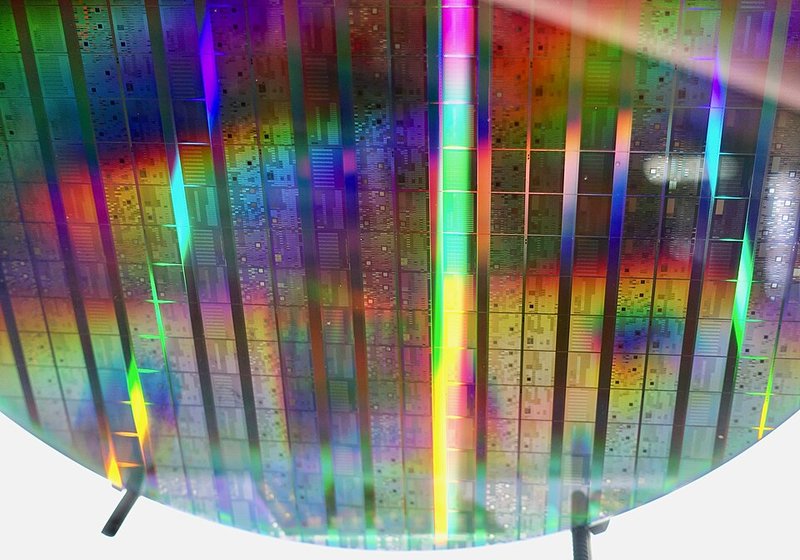
A 450mm silicon wafer shows the manufacturing precision needed for advanced semiconductors—one contamination speck can ruin millions of transistors. Credit: Wikimedia Commons

The $10 Billion Gamble: How Samsung and TSMC's 2nm Race Hinges on Manufacturing Reality, Not Just Physics

Samsung’s 2nm Gate-All-Around transistors achieve breakthrough densities of 300 million transistors per square millimeter—but manufacturing yields of just 40% versus TSMC’s projected 60% could cost an extra $2 billion per fabrication plant. The technology works brilliantly in laboratory demonstrations, yet the gap between ‘functional in research’ and ‘profitable at volume’ determines which company will control the future of AI processors. This isn’t just a technical race—it’s an economic battle where manufacturing precision, not pure innovation, decides the winner.

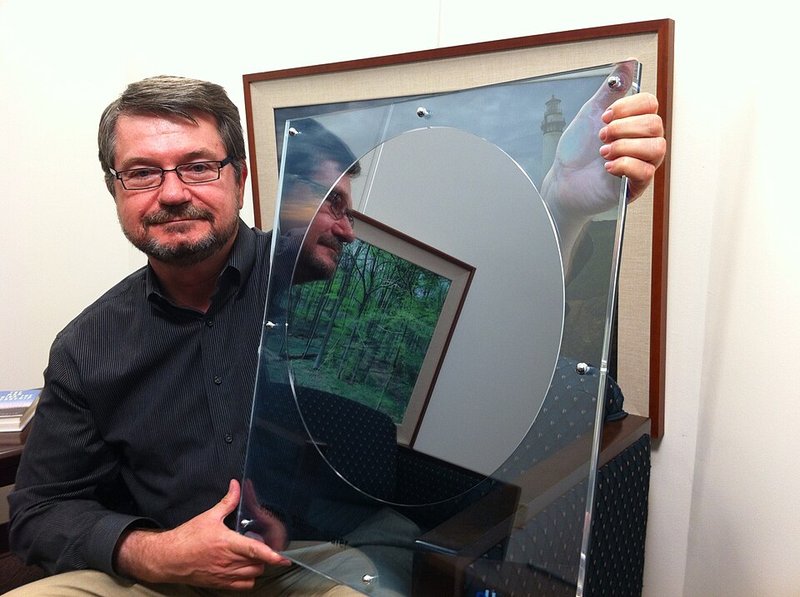
Princeton Plasma Physics Laboratory physicist Dr. Fatima Ebrahimi with an artist's concept of a fusion rocket designed for interstellar travel. The revolutionary propulsion system combines magnetic plasma confinement with direct thrust generation, potentially enabling spacecraft velocities approaching 10% light speed. Credit: PPPL/Elle Starkman

The 30,000 Kilometers Per Second Dream: Why Fusion Ramjets Could Turn a 72,000-Year Journey to Alpha Centauri Into a 45-Year Road Trip

A spacecraft accelerates away from Earth, its fusion engine burning hydrogen scooped directly from the void between stars. At 30,000 kilometers per second—10% the speed of light—it crosses the continental United States in just 10 seconds. This isn’t science fiction: it’s the engineering goal of fusion ramjet technology that could transform interstellar travel from a multi-generational odyssey into a single human lifetime. Recent breakthroughs in fusion ignition and magnetic field engineering are bringing this 1960s concept tantalizingly close to reality.

Advanced neural interface technology at Mayo Clinic: thousands of microscopic electrodes creating a direct bridge between brain signals and computer systems. This isn't science fiction—it's enabling paralyzed patients to control robotic arms with thought alone. Credit: Mayo Clinic

Breaking the 100,000-Channel Barrier: Why Your Smartphone Has More Computing Power Than Your Brain Has Recording Electrodes

While your smartphone processes billions of electrical signals every second, the most advanced brain-computer interfaces can barely monitor 1,000 neurons simultaneously. New high-density electrode arrays are shattering this limitation, packing 100,000 recording sites onto chips smaller than a thumbnail. The breakthrough doesn’t just improve brain monitoring—it enables paralyzed patients to control robotic prosthetics with finger-level precision, transforms epilepsy surgery from guesswork to GPS-guided precision, and could make thought-controlled devices as seamless as using your voice.

Inside a photonic crystal fiber: tiny structures guide light like highway lanes guide cars. This same principle lets optical processors perform calculations using light instead of electricity. Credit: Wikimedia Commons

The Speed of Light Meets Machine Learning: How Silicon Photonic Neural Networks Could Replace GPU Clusters

When AI training consumes entire power grids and takes weeks to complete, photonic processors offer a radical alternative: performing matrix operations at the speed of light. Recent breakthroughs demonstrate 100x speedup potential in neural network training using silicon photonic chips that replace electronic computation with optical interference patterns. This isn’t distant future tech—companies like Lightmatter and Intel are already prototyping photonic AI accelerators that could make today’s GPU farms look primitive.

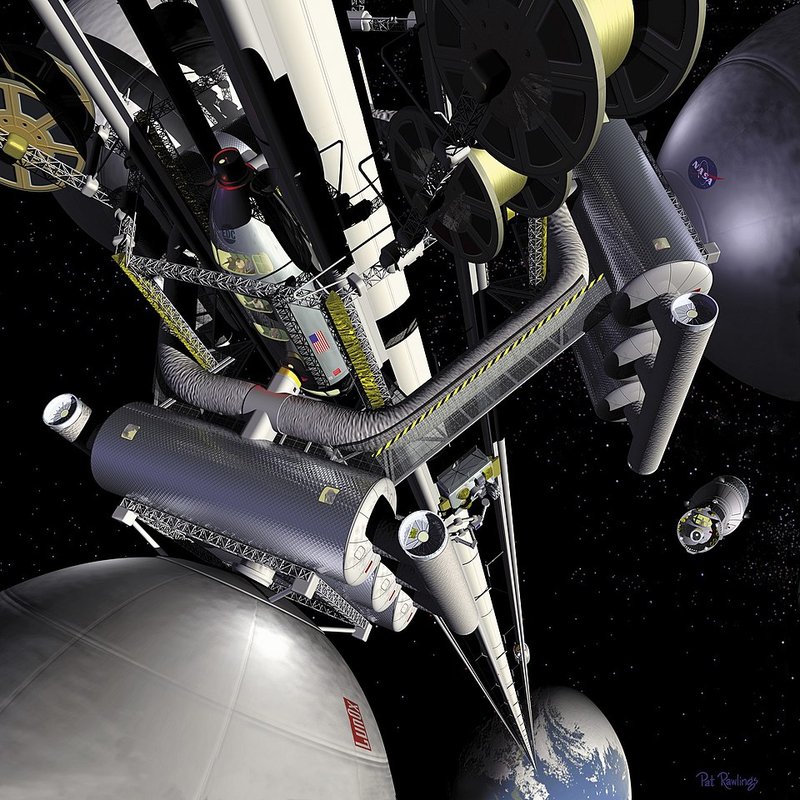
NASA's artist concept of a space elevator system extending from Earth's surface to beyond geostationary orbit. The 100,000-kilometer tether would be held in tension by the rotational dynamics of Earth itself, creating a highway to space that operates like a vertical railroad. Credit: NASA/Wikimedia Commons

Why the 100,000-Kilometer Dream Refuses to Die: The Physics-Defying Materials Race That Could Make Space Elevators Reality

A carbon nanotube tether 100,000 kilometers long—that’s 25% of the distance to the Moon, strong enough to support its own weight plus massive payloads. Japanese engineering giant Obayashi claims they’ll build it by 2050, while new breakthroughs in nanotube synthesis edge closer to the impossible: materials 100 times stronger than steel cable, manufactured at kilometer lengths. The space elevator isn’t science fiction anymore—it’s an engineering challenge with a $10 billion price tag and the potential to drop launch costs from $22,000 per kilogram to just $500.

NREL's Best Research-Cell Efficiency Chart showing the dramatic rise of perovskite tandem technologies, including the recent breakthrough past 33% efficiency that surpasses single-junction theoretical limits. Credit: NREL/Wikimedia Commons

The Missing Piece in Solar's 33% Efficiency Breakthrough: Why Interface Engineering Finally Unlocked Perovskite-Silicon's Full Potential

After years of promise and disappointment, perovskite-silicon tandem solar cells have shattered the 33% efficiency barrier through a breakthrough in bilayer interface passivation. Hong Kong Polytechnic University’s 33.89% certified achievement—the first perovskite tandem to exceed single-junction theoretical limits—proves that the key wasn’t better materials, but solving the hidden interface problem that silently destroyed charge carriers at the nanoscale junction between layers.

Intel quantum processor wafer showing multiple quantum computing chips before dicing. Intel's silicon-based quantum processors are specifically designed for fault-tolerant quantum error correction. Credit: Wikimedia Commons

Silicon's Quantum Leap: First Stabilizer-Based Error Detection Brings Fault-Tolerant Computing Within Reach

Chinese researchers have demonstrated the first stabilizer-based quantum error detection in silicon quantum processors, achieving 88.5% fidelity for four-qubit states while identifying strongly biased noise patterns. This Nature Electronics breakthrough connects today’s research directly to Intel’s fault-tolerant quantum processors targeted for 2029, requiring exactly these stabilizer techniques for practical quantum computing.